
Acrylic Keychain Manufacturer Checklist: Printing, Thickness, Hardware and Sampling
Article contents
- Start With One Controlled Project Brief
- Acrylic Keychain Manufacturer Evaluation at a Glance
- 1. Match the Acrylic Route to the Artwork and Sales Program
- 2. Approve the Print Build, Not Only the Image
- 3. Treat Thickness as Part of the Complete Build
- 4. Review the Cutline, Edge and Hanging Point Together
- 5. Specify Every Hardware Component
- 6. Use the Right Proof and Sample for Each Risk
- 7. Create a Written Sample Approval Record
- 8. Define Bulk Quality Checks Before Production
- 9. Approve Packaging With the Complete Product
- 10. Compare Manufacturer Quotes on the Same Basis
- Red Flags Before Bulk Approval
- RFQ Checklist for an Acrylic Keychain Project
- Frequently Asked Questions
Purchasing priorities
- Consistency: Can the bulk order be checked against the approved front and back artwork, transparent areas, print result, hole position and hardware, beyond one acceptable sample?
- Total cost: Does a lower-priced option change the sheet build, printed sides or hardware, or leave out surface protection and the actual packaging?
- Timing: Which artwork, physical sample and packaging approvals are needed before bulk scheduling, and must timing be reconfirmed if print layers, holes or fittings change?
An acrylic keychain manufacturer should be able to turn your artwork into a controlled product specification before bulk production starts. That specification needs to define the acrylic build, printed sides, transparent and opaque areas, outline, hole position, hardware, surface protection and packaging. A sample then shows whether the proposed construction works as one finished product.
This checklist is for merchandise brands, artist stores, importers and promotional product buyers comparing manufacturers or approving an acrylic keychain for production. It focuses on the decisions that need written evidence. Product styles and quotation options remain on the Custom Acrylic Keychains Wholesale page. Buyers still comparing acrylic with PVC, metal or plush can start with Custom Keychains for Bulk Orders.
Start With One Controlled Project Brief
Two suppliers can quote the same artwork and still price different products. One may include double-sided printing, a specific connector and individual packing. Another may assume a simpler print build, standard hardware or loose bulk packing. A fair comparison starts with the same written brief.
At minimum, record:
- the artwork file name and version;
- quantity for each design and colorway;
- intended use and selling channel;
- finished width and height with units;
- acrylic route and requested surface effect;
- printed sides and viewing orientation;
- areas intended to remain transparent;
- outline, hole or loop position;
- ring, clasp, chain and connector requirements;
- individual packaging, backing card, barcode or label needs;
- destination country and required in-hand date;
- sample type and the decisions it must confirm;
- buyer-required inspection, testing or documentation.
Use the same brief for every candidate. If a manufacturer recommends a different construction, ask for the change and its effect on appearance, price, minimum quantity, sampling and timing to be shown separately.
Acrylic Keychain Manufacturer Evaluation at a Glance
| Decision | What the manufacturer should confirm | Evidence to review |
|---|---|---|
| Acrylic build | Sheet route, color or effect, surface finish and actual build used for the sample | Written specification and representative sample |
| Printing | Printed sides, artwork orientation, transparent areas, white-ink or opaque backing requirements | Versioned digital proof and physical print sample |
| Thickness | Finished sheet build and how it affects weight, edge, hole and hardware | Measured sample and quoted specification |
| Cutline and hole | Final outline, hole position, remaining material and hanging direction | Production artwork and physical sample |
| Hardware | Ring, clasp, chain, connector, finish and assembly direction | Component list and assembled sample |
| Surface protection | Requested coating or effect, film if used and handling method | Sample plus packing method |
| Bulk quality | Color, alignment, edges, surface, hole and hardware checks | Product-specific inspection checklist |
| Packaging | Product orientation, protection, SKU and barcode details | Packaging proof and packed sample |
The supplier does not need to use this exact table. The important point is that each decision connects to an approval record instead of remaining in chat messages or assumptions.
1. Match the Acrylic Route to the Artwork and Sales Program
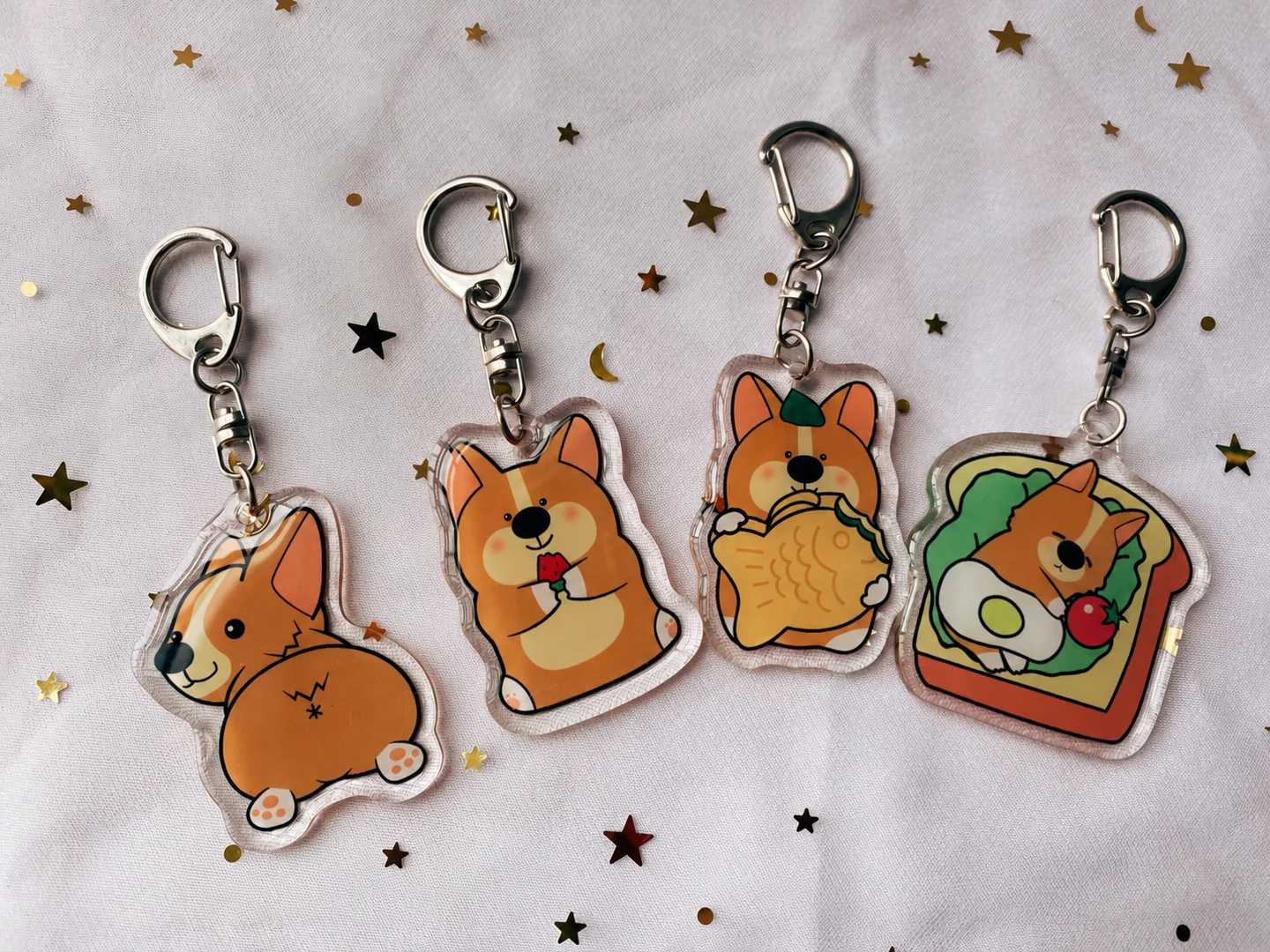
“Acrylic keychain” is not one fixed construction. Eversun’s current product route includes clear, colored, glitter, holographic and shaker options, with single-sided, double-sided or epoxy-finish directions where suitable. Each route changes what the proof and sample need to demonstrate.
Before asking for a price, explain what the artwork needs to do:
- Is transparency part of the design?
- Must the front and back show the same image, different images or mirrored artwork?
- Does the design need a glitter, holographic or other visible sheet effect?
- Is a raised or coated surface effect requested?
- Is the item a simple printed sheet, or does it include shaker or liquid-filled construction?
- Will the keychain be sold as a collectible, used as a promotional item or packed with another product?
A simple printed-sheet specification does not define a shaker or liquid-filled item. Ask the manufacturer to name the construction being quoted and identify any separate sample checks. The buyer should also separate the acrylic body from beads, tassels, fabric, cord or other added decorations. Each added part needs its own material, attachment and inspection decision.
Do not approve a vague phrase such as “premium acrylic.” Record the selected route and the visible result expected from the current artwork.
2. Approve the Print Build, Not Only the Image
A digital image shows the design, but it does not explain every production layer. The handoff should identify how the artwork will appear on a transparent or colored sheet.
Ask the acrylic keychain supplier to confirm:
- the front and back viewing sides;
- whether each side uses the same or different artwork;
- which areas remain transparent;
- where an opaque or white-ink backing is required for the selected build;
- the orientation of lettering on both sides;
- the relationship between the artwork, cutline and hanging point;
- any bleed or production-layer requirement in the supplier’s template;
- whether the proof represents the final color and construction limits or only the layout.
Use a file version in every proof. A useful name links the design, revision and side, such as a buyer’s internal design reference followed by front, back and a revision number. The exact naming convention is less important than making the approved file unambiguous.
Check the proof at the intended finished size. Thin strokes, small text and fine gaps may look clear when enlarged on a screen but behave differently on a compact product. Ask the manufacturer to flag details that may need adjustment before a sample is produced.
The Upload Artwork page lists the Eversun project information that should accompany a file: outline, hole or loop position, front and back, transparent areas, finished size, quantity per design and the current version name.
3. Treat Thickness as Part of the Complete Build
There is no universal “best” thickness for every acrylic keychain. The correct choice depends on the sheet route, finished dimensions, artwork, surface treatment, product weight, hole area, hardware and target price.
Ask the manufacturer to state the actual build rather than giving only a marketing label. If the product uses more than one layer or an additional surface treatment, confirm whether the quoted thickness refers to the base sheet, the combined build or another measurement.
Review thickness together with:
- the finished width and height;
- the remaining acrylic around the hole;
- the size and weight of the selected hardware;
- the way the item hangs;
- edge appearance;
- packaging clearance;
- surface protection during packing and transport.
During sample approval, measure the agreed points with the same units used in the specification. Record the measured result and any accepted tolerance or visual reference. Avoid copying a thickness from another supplier’s product unless the complete construction is equivalent.
When comparing quotes, check that every supplier priced the same thickness definition. A lower unit price based on a different sheet build is not a like-for-like offer.
4. Review the Cutline, Edge and Hanging Point Together
The outline and attachment point affect both appearance and function. They should be reviewed as one design decision.
On the production artwork, identify:
- the final contour;
- any internal cut areas;
- the hole or loop position;
- the connector direction;
- the top and bottom orientation of the finished artwork;
- the remaining acrylic around the hanging point.
Ask the manufacturer to confirm whether the proposed hole position leaves a suitable area for the selected build and hardware. The answer should refer to the actual sample or production artwork. Do not invent a universal minimum edge distance for every sheet route, size and connector.
On the physical sample, inspect the edge from several angles. Look for unwanted roughness, visible damage, irregular contours or a hole that does not match the approved position. Then hang the sample by the intended hardware. Confirm that the design faces the correct way and does not rotate into an unintended display position.
If the design changes after this check, update both the artwork version and the sample decision. Moving the hole can affect the outline, artwork balance and packaging orientation.
5. Specify Every Hardware Component
“Standard keyring” is not a complete specification. The finished assembly may include a split ring, lobster clasp, short chain, jump ring or another connector. Each part affects appearance, movement, weight and package fit.
List the hardware as separate components:
- attachment type;
- visible size or relevant dimensions;
- finish or color direction;
- chain length and link style where used;
- connector quantity and assembly order;
- opening or movement required for the intended use;
- orientation of the acrylic body after assembly.
If the product includes a clasp, check how it opens and swivels. For a split ring, inspect closure and deformation. For a short chain, check link connection and the way the acrylic body hangs. Agree any buyer-required functional check before the order.
Hardware can also mark the decorated surface during transport. The packing method should keep metal parts from rubbing against printed or finished acrylic. That decision belongs in both the product specification and packaging sample.
6. Use the Right Proof and Sample for Each Risk
A digital proof and a physical sample answer different questions.
The digital proof can confirm:
- artwork version;
- front and back layout;
- orientation;
- transparent areas;
- cutline and hole position;
- proposed logo placement.
The physical sample can confirm:
- the actual acrylic route and build;
- visible color and print result;
- thickness and finished dimensions;
- edge and hole condition;
- surface effect and protection;
- hardware fit and hanging direction;
- packaging fit and product protection.
Eversun distinguishes existing reference samples, material or hardware samples, new custom or pre-production samples and packaging samples. A reference sample can show an available construction, but it does not approve your artwork. A loose component does not approve the finished assembly. A packaging proof does not show whether the product fits securely inside the pack.
For acrylic projects, custom sampling fees may be credited or refunded under agreed project terms. Confirm the amount, conditions and timing before sampling. Do not assume that every reference or custom sample is free.
Use Order Samples Before Bulk Production to state the sample type, design reference, requested checks, revision scope and destination.
7. Create a Written Sample Approval Record
Avoid approving a sample with only “looks good.” Record the decision against the specification.
| Sample item | Approval question | Record |
|---|---|---|
| Artwork | Is the correct version printed on each side? | File names and revision |
| Transparency and backing | Are clear and opaque areas correct? | Approved proof and sample photos |
| Color and print | Is the visible result acceptable under the agreed review conditions? | Accepted reference and comments |
| Dimensions and thickness | Do the measured points match the agreed specification? | Values, units and accepted limits |
| Cutline and edge | Does the contour match, with an acceptable visible edge? | Photos and decision |
| Hole and hardware | Are position, connector and hanging direction correct? | Component list and function check |
| Surface | Is the requested effect present and protected? | Finish description and sample reference |
| Packaging | Does the actual product fit, face correctly and avoid rubbing? | Packed sample and pack version |
List every change still required. State whether a revised digital proof, component sample, physical product sample or packaging sample is needed. A corrected photograph may be enough for a layout change, while a change to sheet build, thickness, hole, hardware or surface construction may require another physical sample.
Keep the final approval with the purchase order and bulk-release record. Eversun’s Production Process connects the project brief, artwork review, physical sample, bulk release and shipment preparation to the same design version.
8. Define Bulk Quality Checks Before Production
“Quality checked” does not tell the buyer what was inspected. Build the inspection list from the approved sample and product specification.
For a printed acrylic keychain, the list may include:
- correct design and quantity per design;
- finished dimensions and agreed thickness points;
- correct front and back orientation;
- print placement and alignment;
- visible color against the approved reference;
- transparent and opaque areas;
- cutline, edge and hole condition;
- surface marks, scratches or finish defects;
- correct ring, clasp, chain and connector;
- hardware assembly and closure;
- protective film or other agreed protection;
- package, label, barcode and SKU match;
- carton quantity and item identification.
The buyer and manufacturer should agree how checks will be performed and how unacceptable results will be handled. If your customer or destination requires a specific test or document, put it in the quotation request. A generic certificate or result from another product does not automatically cover the current keychain.
Ask what inspection evidence will be provided before shipment. Photos can support a record, but they need clear item references and should show the checks that were actually agreed.
9. Approve Packaging With the Complete Product
Packaging protects the print and hardware while identifying the correct design. Do not approve only the card artwork.
For an individual bag, confirm usable size, closure, product orientation and separation between hardware and the decorated body. For a backing card, confirm fixing points, hanging direction, readable artwork, barcode position and the way the hardware is held. For a box or gift set, confirm the internal fit and the correct items per set.
Check the actual acrylic keychain inside the proposed pack. Confirm that:
- the body faces the intended direction;
- the hardware cannot rub against the print or finish;
- protective film or other agreed protection remains in the correct state;
- the package does not force the connector into an unwanted position;
- the design name, SKU and barcode match the product;
- different designs can be separated and identified in the carton.
See Packaging for Custom Accessory Orders when preparing a retail pack or private label request.
10. Compare Manufacturer Quotes on the Same Basis
Use one comparison sheet. For every acrylic keychain manufacturer, record:
- material route and full sheet build;
- finished size and thickness definition;
- printing sides and surface effect;
- cutline and hole assumptions;
- hardware components and finish;
- quantity per design;
- sample scope, fee and revision terms;
- packaging format and setup;
- inspection and evidence included;
- production and shipment schedule assumptions;
- freight basis, exclusions and open decisions.
Ask suppliers to mark deviations from your brief. A change to print sides, thickness, hardware or packing makes the quotation a different offer.
For Eversun projects, adding a logo to an existing style can start from 100 pieces. A new printed-acrylic shape also starts from 100 pieces per design. Special constructions, hardware and packaging still need project-specific confirmation. Treat these quantities as Eversun’s stated project routes, not as a universal minimum for every manufacturer.
Put open conditions into the RFQ and schedule
- Does the schedule include the selected special sheet or surface effect, specified hardware and backing card, and which inputs still await supply or approval?
- If transparent areas, the white-ink backing, hole position or hardware change after approval, which proof or physical sample must be reviewed, and how will the bulk date be reconfirmed?
Red Flags Before Bulk Approval
Pause and close the gap when:
- the quote does not identify the acrylic build or printed sides;
- the proof omits transparent areas, cutline or hole position;
- thickness is stated without explaining what part of the build it measures;
- the sample uses different hardware from the bulk quotation;
- the supplier cannot identify the approved artwork and sample version;
- a surface effect is promised without a representative sample;
- inspection is described without product-specific checkpoints;
- packaging is added after sampling without a fit review;
- hardware can contact the decorated surface inside the pack;
- a change can be made without written buyer approval;
- a delivery promise does not show which approvals start the schedule.
These points are questions to resolve with evidence. They do not prove that a supplier is unsuitable on their own.
RFQ Checklist for an Acrylic Keychain Project
Send the following information through the Request a Quote page:
- intended use and sales channel;
- artwork or labeled reference image;
- finished size and units;
- acrylic route or the visual effect you need help selecting;
- front, back and transparent-area requirements;
- outline, hole or loop position;
- preferred ring, clasp, chain or connector;
- quantity for each design;
- sample type and approval questions;
- individual packing, backing card, barcode and label requirements;
- destination country and required in-hand date;
- inspection, test or documentation requirements.
If a decision is open, say what recommendation you need. A complete brief lets the manufacturer separate confirmed inputs from proposals and prepare a comparable quotation.
Frequently Asked Questions
What should I ask an acrylic keychain manufacturer?
Ask the manufacturer to confirm the actual acrylic build, printed sides, transparent and opaque areas, thickness definition, cutline, hole position, hardware, sample scope, bulk checks and packaging. Require every approval to identify the current artwork and sample version.
Is a digital proof enough for a bulk acrylic keychain order?
It can approve layout, orientation, transparent areas, cutline and hole position. A physical sample is needed when the decision depends on the actual material, thickness, print result, edge, surface effect, hardware fit or packaging.
Which acrylic thickness should I choose?
Choose it with the complete construction in mind. The finished size, sheet route, surface treatment, hole area, hardware, product weight, packaging and target price all affect the decision. Ask for the actual thickness definition and confirm it on the sample rather than using one number for every design.
How can I check print quality before bulk production?
Approve a versioned digital proof, then review a representative physical sample for visible color, alignment, front and back orientation, transparent areas, edge condition, surface and hardware. Record the accepted reference and the checks that will be repeated during bulk inspection.
How do I prevent acrylic keychains from being scratched in transit?
Confirm the agreed surface protection and packing method on the sample. Position the ring, clasp and chain so they cannot rub against the decorated body. Approve the complete product inside the proposed package before bulk packing.