
Custom Plush Keychain Manufacturer Guide: Construction, Labels, MOQ and QC
Article contents
- Build One Controlled Plush Keychain Specification
- Manufacturer Evaluation at a Glance
- 1. Define the Use Case Before Choosing Materials
- 2. Convert Character Artwork Into a Manufacturable Pattern
- 3. Specify Fabric, Color and Pile Direction
- 4. Match Embroidery, Print and Appliqué to Each Detail
- 5. Control Filling, Shape and Hand Feel
- 6. Review Seams, Small Parts and the Hanging Loop
- 7. Plan Branding, Sewn Labels and Hangtags Early
- 8. Match MOQ to the Development Route
- 9. Use Sampling as a Decision Gate
- 10. Build a Plush-Specific Bulk QC Plan
- 11. Approve Packaging With the Actual Product
- 12. Compare Quotes on the Same Scope
- Questions to Ask Before Choosing a Supplier
- Final Approval Checklist
Purchasing priorities
- Consistency: Can bulk production retain the approved character expression, proportions, pile direction, filling feel and loop position?
- Total cost: Do quotes for the same character include the same fabric, face technique, labels, hardware and packaging, with custom dyeing or special development identified separately?
- Timing: When will pattern and face revisions, fabric approval, labels, packaging and buyer-required checks be completed, and which decisions affect bulk release?
A custom plush keychain manufacturer should convert a character, logo or product idea into a controlled specification before bulk production begins. The buyer needs more than a good-looking sample. The approved record should define the shape, size, fabric, pile direction, decoration, filling, seams, hanging loop, hardware, labels and packaging. It should also state which market and use case the product is being developed for.
This guide is for toy brands, gift brands, retailers, licensors and promotional product buyers comparing suppliers or preparing a plush keychain order. It focuses on construction and approval decisions. Eversun’s available styles, starting quantities and quotation routes remain on the Custom Plush Keychains Manufacturer page. Buyers comparing plush with acrylic, PVC or metal can start with Custom Keychains for Bulk Orders.
Five product examples: compare construction before cost and timing
These company-library product examples compare construction and buying decisions. They are not documented customer-delivery case studies, and no client, quantity, development time or sales outcome is implied. Confirm fabric, dimensions, filling and fittings for each project.
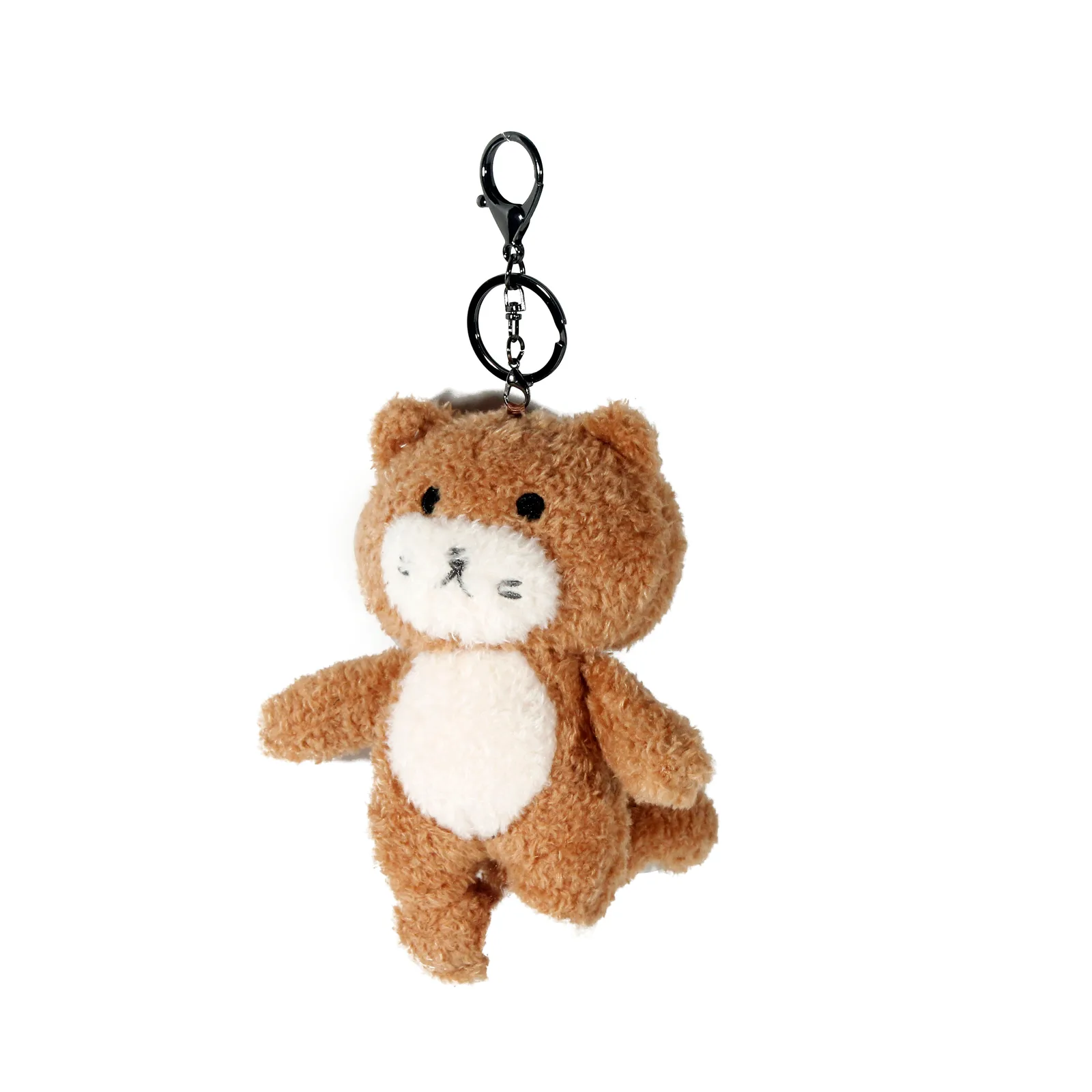
Buying decision: Freeze the front and back profile, face placement and hanging point. A different clasp or connector length still requires checking the complete hanging assembly and packing.

Buying decision: Check on a physical sample whether the pile hides the face or seams. Specify pile length, direction and attachment, and agree grooming or trimming scope and consistency with the sample. A photo does not replace inspection.

Buying decision: Clothing, apron and bow each require material, placement and attachment decisions. Decide which parts are removable or secured before planning assembly and recheck milestones; compare the complete configuration rather than a bare body.
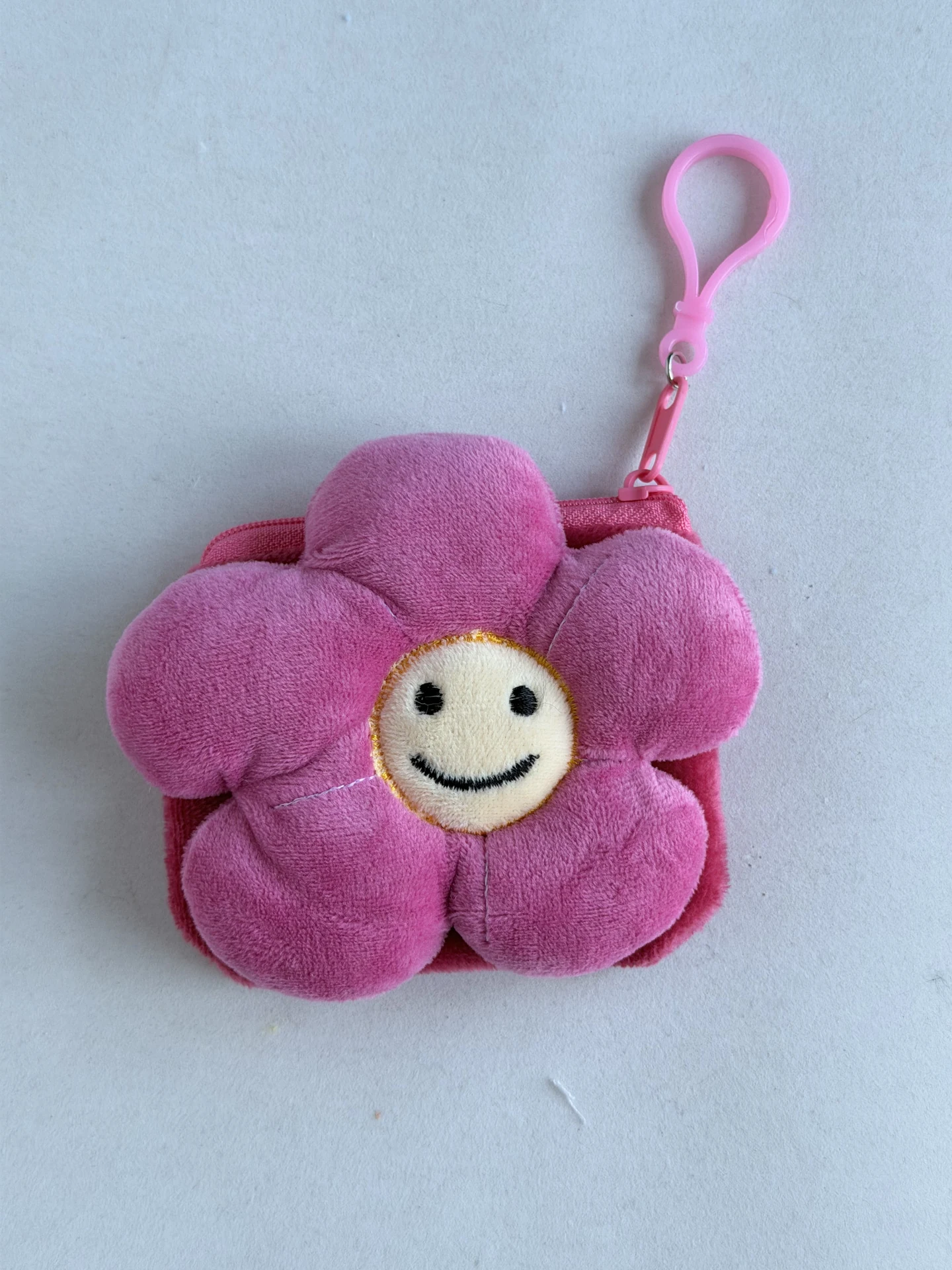
Buying decision: For a zipped charm, check the decorative shape separately from the functional construction. Agree the closure, opening, attachment point and any lining before comparing price and assembly or inspection timing. The image does not establish capacity or zipper life.

Buying decision: Confirm backing, pattern coverage, edge treatment and hanging point before deciding whether filling is needed. Review the companion piece with the body. Do not equate a flat patch with a stuffed shape of the same outline or infer PU or genuine leather from appearance.
Build One Controlled Plush Keychain Specification
Two factories can quote the same character and still assume different products. One may use a short-pile fabric and embroidered face. Another may use printed fabric, a woven label and a different attachment loop. Their prices and samples are not comparable until the assumptions are written down.
Start the request with one project brief that records:
- artwork or character reference name and version;
- front, back and side views where they affect construction;
- intended use, sales channel, destination market and intended user or age grading;
- finished height, width and depth with units;
- fabric type, color direction and pile or texture requirements;
- embroidery, print, appliqué or woven-label details;
- filling and the intended shape or hand feel;
- seam, edge and small-part decisions that need special review;
- hanging loop position, reinforcement and hardware;
- sewn label, hangtag, barcode, warning or buyer-supplied text requirements;
- quantity for each design and colorway;
- individual packing, display packing and carton-marking needs;
- target in-hand date and delivery destination;
- sample type, approval record and bulk inspection requirements;
- buyer-required tests, reports or compliance documents.
Use this same brief when comparing candidates. If a supplier proposes a different construction, ask it to show the change and its effect on appearance, price, minimum order, sampling and timing separately.
Manufacturer Evaluation at a Glance
| Decision | What the manufacturer should confirm | Evidence to review |
|---|---|---|
| Character construction | Pattern pieces, silhouette, proportions and details that must be simplified | Marked artwork, pattern notes and physical sample |
| Fabric | Fabric route, visible color, pile direction and approved reference | Swatch or sample tied to a specification |
| Decoration | Embroidery, print, appliqué or label method for every feature | Versioned files and physical result |
| Filling | Intended firmness, shape support and distribution | Approved sample and bulk check method |
| Sewing | Critical seams, narrow parts and reinforcement points | Construction notes and inspected sample |
| Attachment | Loop material, position, reinforcement, connector and metal hardware | Component list and assembled sample |
| Branding and labels | Logo method, sewn label, hangtag and required copy | Approved artwork and placement record |
| Bulk quality | Shape, face, seams, filling, attachment, labels and packing checks | Product-specific inspection list |
The manufacturer does not need to use this exact table. It does need to connect every important decision to a file, sample or written approval that can guide bulk production.
Production and approval stages for sewn plush · process diagram
Approve the pattern, materials and physical sample before scheduling bulk production against that version. These are purchasing checkpoints; cutting, embroidery and assembly order may vary with construction.
Approve front, back and side views, proportions, panels, attachment position and version. Mark any simplified details on the artwork.
Check fabric, color, filling and decoration. Use the physical sealed sample and written specification approved by both parties as the production reference.
Set embroidery, printing and cutting order for the construction. Check pile direction, decoration position, matching panels and detail at finished size.
Review seam allowances, corners, narrow parts and loop reinforcement. The front silhouette alone does not approve the attachment construction.
Compare fill quantity, distribution, feel and shape with the sealed sample, including lumps or unequal sides.
Inspect the closing seam, loose threads, escaping filling and face details. Recheck shape after changes to stitching or filling.
Check the loop, connecting ring, chain, clasp and orientation. Review hanging balance and the load path through the complete assembly.
Check appearance, attachments, labels and packing under the agreed plan, recording batch and sample identities. Assess compression, hardware marks and recovery after packing.
Process images come from different factory records and are matched to what is visible. They do not document one SKU, one order batch or every stage taking place at one location.
1. Define the Use Case Before Choosing Materials
A plush charm sold as an adult collectible may require a different brief from a promotional giveaway or a product intended for children. The destination market, intended user, selling channel and product claims affect the buyer’s testing, labeling and document requirements. State these details before the supplier selects materials or prepares a quote.
Ask the supplier to separate confirmed facts from open questions:
- What is the intended use of the item?
- Will it be sold, given away or packed with another product?
- Is it intended for children, adults or a specifically defined audience?
- Which countries or regions will receive it?
- What buyer or retailer protocols apply?
- Which tests or documents must relate to the exact material, component and finished-product scope?
Do not accept a general statement such as “compliant material” as proof that the finished project meets the buyer’s requirements. Before relying on a report or certificate, check the holder, issuer, product description, model or material scope, test method, date and validity for the intended market. The buyer should confirm applicable requirements with its own compliance process.
2. Convert Character Artwork Into a Manufacturable Pattern
A two-dimensional drawing does not automatically define a sewn object. The custom plush keychain manufacturer has to interpret the silhouette, depth, seams and the way small features will be produced. Compact products leave less room for narrow limbs, fine facial details and layered accessories.
Provide the clearest reference available. Front and back views are the minimum for many projects. Side views, color callouts and notes for removable or fixed parts can prevent later assumptions. Mark the character features that cannot change, such as the face, signature colors, hairstyle, ears, clothing or a distinctive accessory.
Then ask which details require simplification. Useful questions include:
- Will the proposed outline hold its shape at the requested size?
- Which narrow parts need to be widened, shortened or joined to the body?
- Which drawn shadows are actual fabric panels, printed areas or visual effects only?
- Can small facial features be embroidered at the intended size?
- Should a tiny accessory become embroidery or appliqué instead of a separate stuffed part?
- Where will the turning or closing seam be placed?
- How will the product hang once the loop and hardware are installed?
Approve the interpreted construction, not only the original drawing. A supplier can reproduce the image faithfully on paper while making different assumptions about the three-dimensional shape.
Pattern-to-panel review: cutting process

3. Specify Fabric, Color and Pile Direction
Eversun’s current plush keychain route can use short plush, faux fur and other fabric choices according to the project. The right choice depends on the character, target feel, size, decoration method, order quantity and buyer requirements.
Record the fabric by location when the design uses more than one material. A specification might distinguish the face, body, hair, clothing and accessory panels. For each area, confirm:
- the proposed fabric route and visible texture;
- color reference and the conditions used to review it;
- pile length or direction where it changes the appearance;
- front and back use;
- any custom dyeing or special sourcing assumption;
- how the approved reference will be identified for bulk production.
Photographs can help communicate direction, but screen color is not a physical approval standard. Review a swatch or physical sample when the exact appearance matters. If custom dyeing is proposed, confirm the separate quantity, timing, color approval and documentation implications before accepting the quote.
Longer pile can hide small embroidery or soften a seam line. Very smooth fabric can show panel shape and filling differences more clearly. Evaluate the fabric together with the character construction rather than treating it as an isolated material choice.
4. Match Embroidery, Print and Appliqué to Each Detail
The face usually carries the character identity, so decoration needs its own approval record. Eversun’s current options include embroidery, printed fabric and woven labels, depending on the design and project.
For every visible feature, state the intended method. The eyes may be embroidered, a cheek color may be printed, clothing may use appliqué and a brand name may appear on a sewn label. Ask the supplier to flag details that are too small, too close together or too near a seam for the proposed method.
When reviewing a sample, check:
- feature position relative to seams and the centerline;
- symmetry where the design requires it;
- readable lettering and recognizable facial expression;
- puckering, distortion or pile trapped by embroidery;
- print placement and visible edges;
- appliqué shape and edge finish;
- thread, print and fabric colors against the approved reference;
- the result from normal viewing distance, not only a magnified photograph.
Keep the final embroidery or print file name in the approval record. If the face position changes after the pattern changes, issue a new version. Do not let a corrected sample refer to an obsolete decoration file.
Embroidery-process video frame

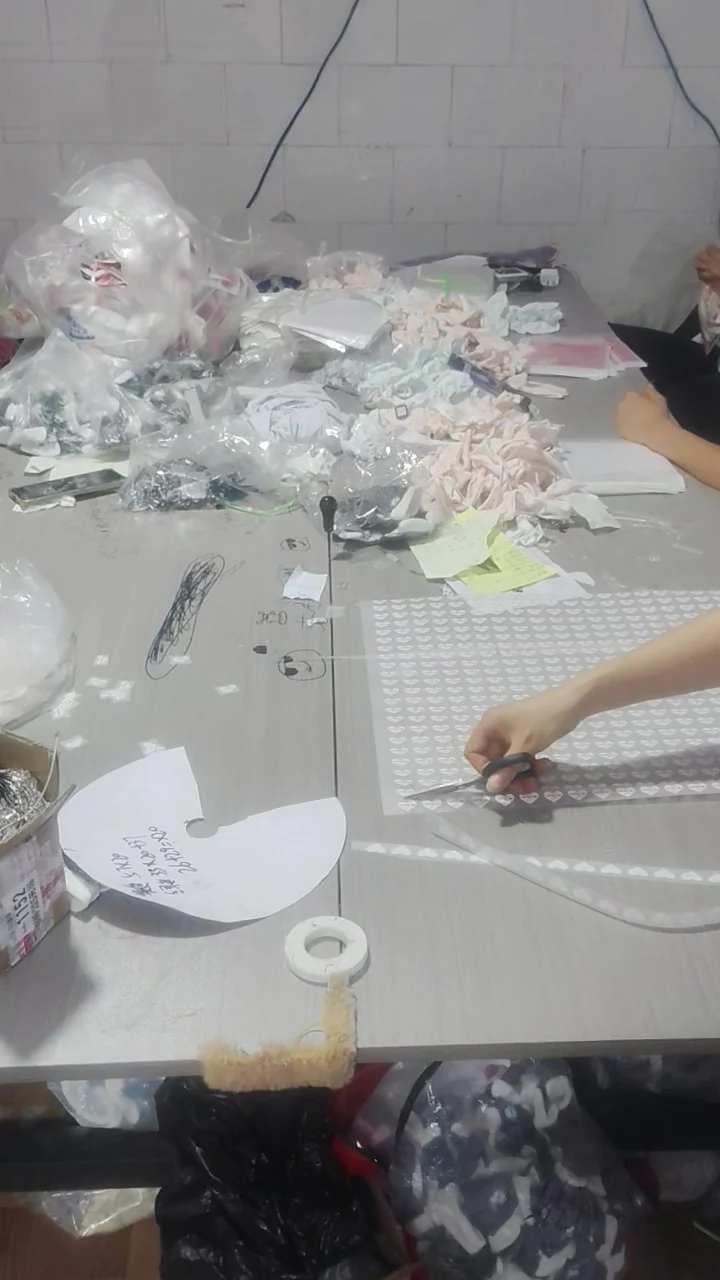
Factory records are grouped by the visible process. Photographs do not replace specifications, batch inspection or the project schedule.
Small decorated-part finishing reference
5. Control Filling, Shape and Hand Feel
“Soft” and “firm” are useful directions, but they are not enough for bulk control. The same outer pattern can look different if filling quantity or distribution changes. Small ears, limbs and accessories may also require a different feel from the body.
Use the physical sample to define the acceptable result. Review:
- overall silhouette from the front, back and side;
- whether the body supports the face and key features;
- filling distribution at corners, limbs and narrow parts;
- unwanted hard spots, gaps or visible lumps;
- the amount of compression and recovery expected for the use case;
- how the shape changes when suspended from the hardware;
- whether the packed item keeps an acceptable presentation.
If the project requires a measurable filling specification, agree it with the supplier for the actual construction. Avoid copying a universal filling weight or density from another product. Pattern size, fabric stretch, component structure and target feel all affect the result.
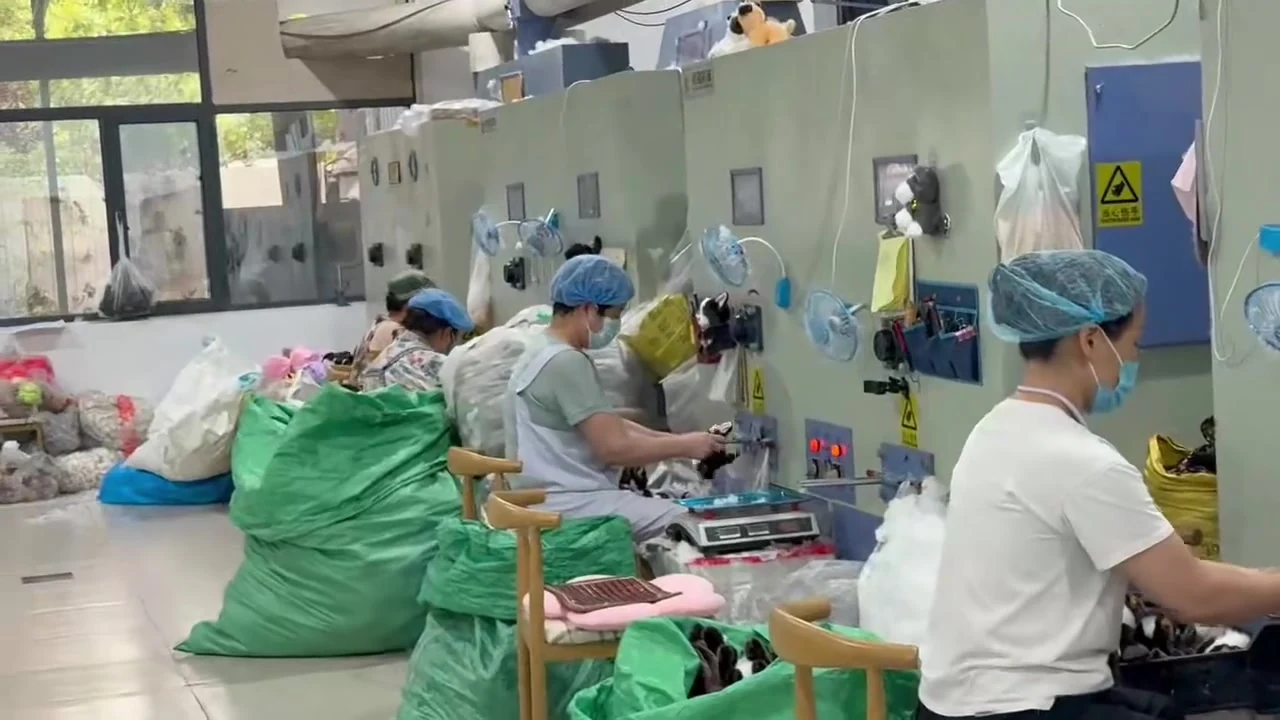
Check filling, shape and feel together
6. Review Seams, Small Parts and the Hanging Loop

The hanging point is a critical part of a plush keychain because it carries the body through a fabric loop, cord or other connector. Its position also determines whether the face remains visible when the product is attached to a bag or key set.
Ask the supplier to identify:
- loop material, width, visible length and color;
- insertion point and direction;
- reinforcement method for the agreed construction;
- ring, short chain, lobster clasp or other hardware;
- connector order and finish;
- whether hair, ears or side accessories interfere with the loop;
- how the part will be checked during sample and bulk inspection.
Inspect the loop together with nearby seams. Look for loose stitching, caught pile, uneven seam allowance, exposed openings and distortion around narrow features. If the product contains separately attached decorations or other small components, list each part and the buyer-required security or testing check. Do not assume that a visually neat sample proves suitability for every user group.
Eversun’s current options include a split ring, short chain or lobster clasp. Select the actual hardware for the project and review the assembled sample. A loose ring or clasp sample does not approve the finished attachment.
Plush sewing workstations
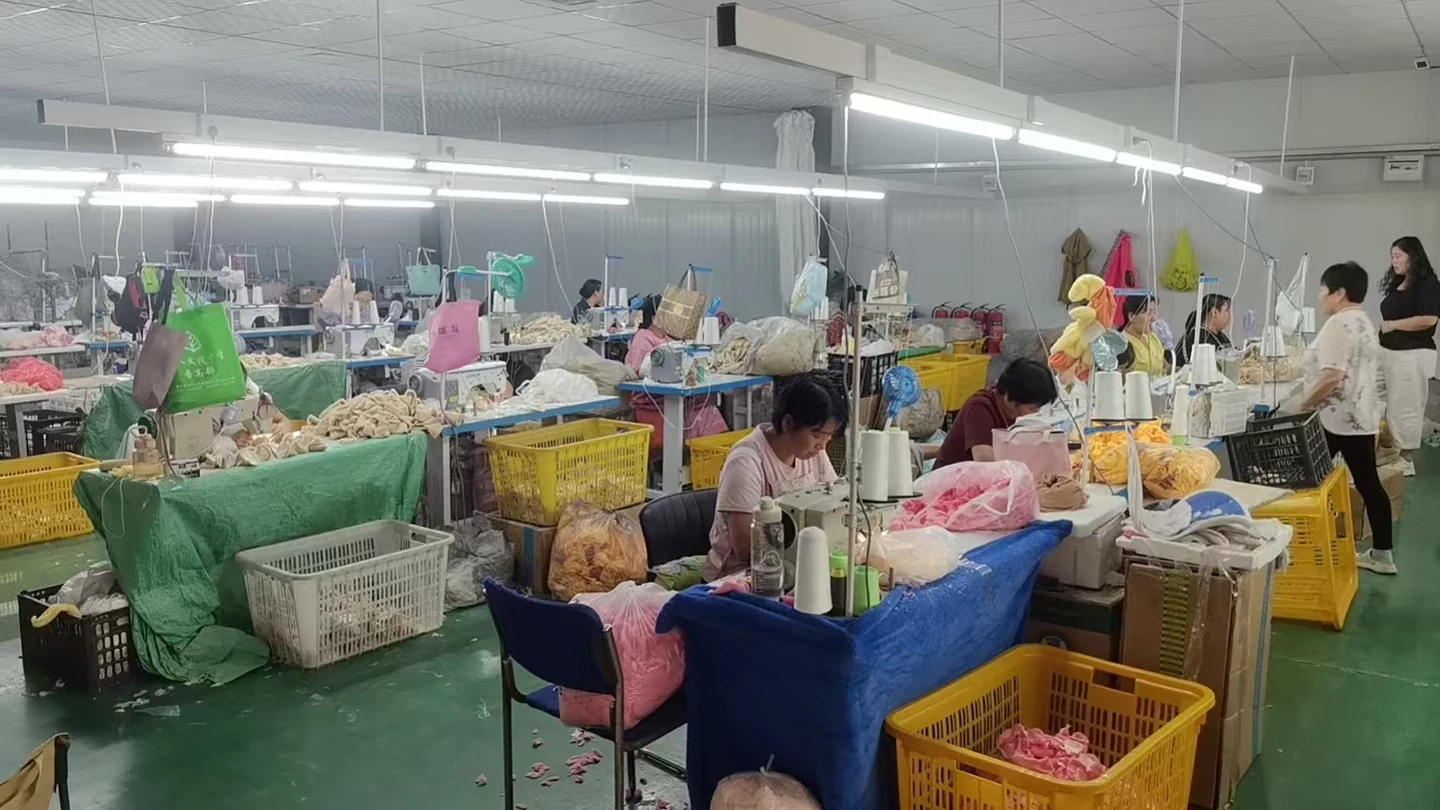
Factory records are grouped by the visible process. Photographs do not replace specifications, batch inspection or the project schedule.
Define pull checks for seams, small parts and the hanging loop
The hanging loop, securing stitches, connecting ring and clasp form one load path. Failure at any link can release the charm. Metal thickness or neat-looking stitches alone cannot replace a complete attachment check. Include narrow sewn areas, such as ears and tails, and positions that may open and expose filling when pulled.
Eversun’s agreed company sample-review requirement is to reach the target force of 90 N and then hold it for 5 seconds at plush seams and hanging-cord connections, with no broken stitches, open seams, exposed or escaping filling, or connection failure. Agree clamp positions, pull direction, loading method, sample quantity and equipment requirements in writing before testing. This is an acceptance requirement, not evidence of a completed passing test or a universal criterion for all parts or markets.
Evaluate eyes, noses, decorative beads and other small parts separately using methods appropriate to the use, age grading and destination market. Do not automatically apply the force above. Projects involving children’s toys for the United States can also consult the CPSC’s official toy-safety guidance. CPSC toy-safety guidance
Before testing, photograph the sample ID, clamp positions and complete attachment. Afterward, use matching views to record changes to stitches, attachment points, exposed filling and hardware. If a failure occurs, isolate the relevant samples and batch pending assessment, identify the construction or process issue, record the correction and retest. A new appearance photograph alone does not close an unresolved failure.
Attachment load path · construction diagram
Arrows identify the attachment chain; they do not prescribe test direction, clamping or loading. Identify seams, narrow areas and small parts on the actual sample. This diagram is not a test photograph and shows no measured or passing result.
Actual sewing and assembly process references

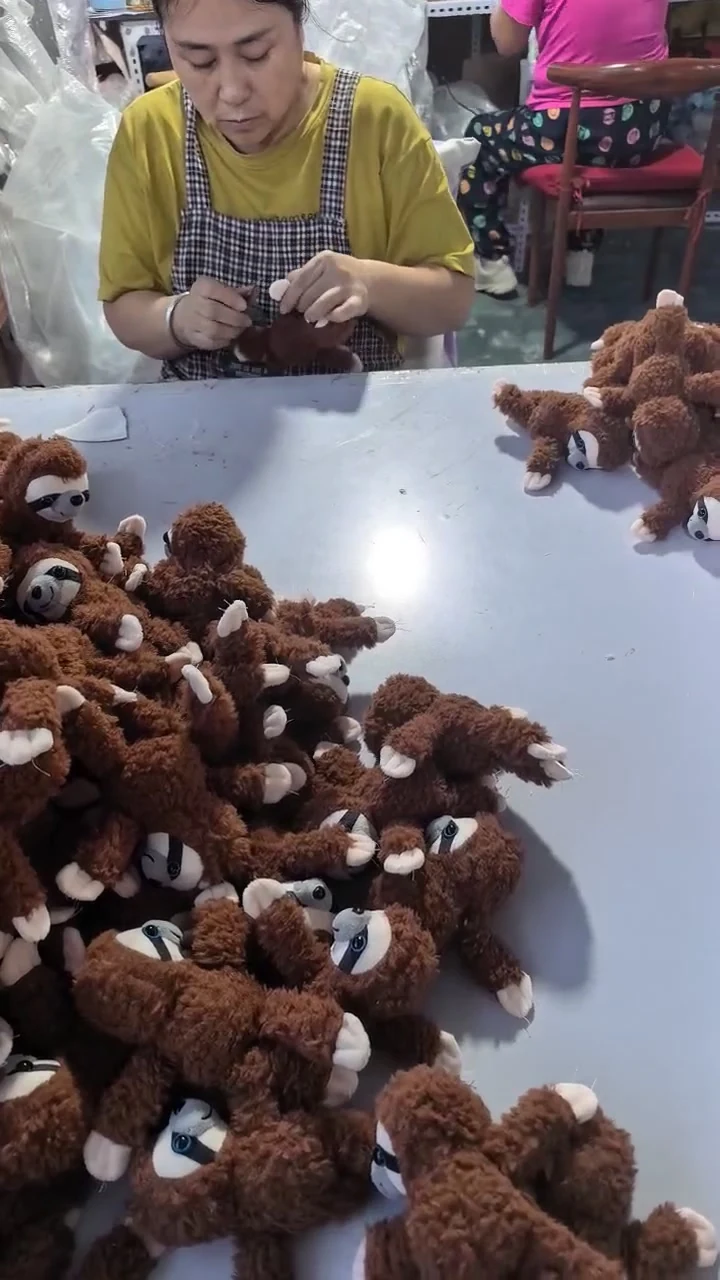

These are process references, not pull-test photographs. Use them to identify construction questions; a test requires records for the actual specimens and conditions.
Eight fields for the pull-check record
| Record field | Information to record |
|---|---|
| Check location | The seam, small part or loop and its complete attachment path. |
| Approval reference | Sealed-sample identity, specification version and acceptance requirement for that location. |
| Batch and samples | Batch, sampling basis, agreed quantity and individual sample IDs. |
| Clamping and direction | Clamp positions, fixture type and actual pull direction. |
| Loading and hold | Agreed loading method, target requirement, actual force reached and hold time. |
| Equipment record | Equipment identity and calibration or status records required by the agreement. |
| Before and after | Matching photographs, failure location and actual observations. |
| Decision and report | Record ID, decision, isolation or correction, retest and closure result. |
Download the seam / hanging-cord pull-record template · Review sample inspection and sealed-sample guidance
7. Plan Branding, Sewn Labels and Hangtags Early
Labels affect both construction and packaging, so they should not be added after the sample is approved. Decide whether the logo belongs on the plush body, a woven or printed sewn label, a hangtag, the package or a combination.
For a sewn label, confirm the artwork, finished fold, visible sides, insertion seam and position. Make sure it does not cover a character feature or sit where the hardware will rub against it. For a hangtag, record its size, print version, hole or attachment method and relationship to the product and retail pack.
Regulatory, fiber, origin, warning or buyer-specific copy should come from the responsible buyer process. The supplier should reproduce the approved text and placement, but the buyer should confirm what is required for the destination market and selling channel. Keep language versions and SKU assignments under version control.
8. Match MOQ to the Development Route
MOQ should be confirmed per design, colorway, construction and packaging version. A general website number may not apply when a project needs a new pattern, custom-dyed fabric, special hardware, a vinyl-face hybrid or complex retail packaging.
For Eversun’s current route:
- an existing style with a logo can start from 100 pieces;
- a new standard sewn plush shape starts from at least 1,000 pieces per design;
- new custom sampling is charged according to complexity;
- ordinary standard sewn plush does not use a separate conventional mold fee;
- vinyl-face hybrid construction, custom dyeing and special requirements need a separate assessment.
Treat these as starting routes for a project discussion, not a price promise. Confirm the exact design, quantity split and package before using them in a purchase decision.
When comparing quotes, ask each custom plush keychain manufacturer to separate the sample charge, unit price, packaging, testing or inspection, freight basis and any one-time development work. A low MOQ can still be a poor fit if it relies on a different fabric, simplified decoration or stock hardware that does not meet the brief.
9. Use Sampling as a Decision Gate
A reference sample can show an existing material or construction. A material sample can show fabric or hardware. A new custom or pre-production sample should prove the proposed character and assembly. A packaging sample should prove the actual packed presentation. These samples answer different questions.
Eversun’s current plush workflow uses sample approval to confirm the pattern, size, fabric, embroidery file, filling, hardware position, label and packing. Reference samples may be available by agreement with the buyer paying freight. Custom plush sample fees may be refunded or credited under agreed project terms. Confirm the amount, conditions and timing before starting; do not assume every sample is free.
Use Order Samples Before Bulk Production to identify the sample type, design reference, requested checks, revision scope and destination. The Upload Artwork page explains how to send the current design version, views, dimensions, quantity and construction notes.
Create a sample approval table instead of replying only “approved.”
| Sample item | Approval question | Record |
|---|---|---|
| Pattern and size | Does the silhouette match the approved interpretation at the measured size? | Dimensions, photos and pattern version |
| Fabric and color | Are all material locations and visible colors correct? | Swatches or sample reference |
| Face and decoration | Are expression, placement and technique accepted? | File names and revision |
| Filling | Are shape, distribution and hand feel accepted? | Written notes and reference sample |
| Sewing | Are seams, narrow parts and closing area acceptable? | Photos and comments |
| Attachment | Are loop position, reinforcement, hardware and hanging balance correct? | Component list and function review |
| Labels | Are artwork, copy, fold and placement correct? | Approved label file and sample |
| Packaging | Does the actual product fit, face correctly and retain its shape? | Pack version and packed sample |
List every remaining change and state which type of new proof or sample is required. A change to spelling may need an updated file and proof. A change to pattern, fabric, attachment or filled shape may require a new physical sample.
10. Build a Plush-Specific Bulk QC Plan
“QC passed” does not explain what was checked. Build the inspection list from the approved sample and written specification before bulk production.
For a plush keychain, the checklist may cover:
- correct design, colorway and quantity;
- measured finished dimensions at defined points;
- overall shape and recognizable character features;
- fabric type, color, pile direction and panel placement;
- embroidery, print, appliqué and label position;
- filling distribution and acceptable shape;
- seams, closing area, loose threads and exposed openings;
- attached ears, limbs, clothing or accessories;
- loop position, hardware type, finish and assembly;
- buyer-required attachment or functional checks;
- sewn-label and hangtag version;
- individual pack, SKU, barcode and assortment;
- carton quantity, markings and shipment preparation.
For each item, define the inspection method, reference, units and acceptance decision. A useful reference may be the approved sample, artwork file, component list or packaging proof. Agree how nonconforming units will be identified, separated and resolved. If the buyer requires a sampling plan, third-party inspection or laboratory test, define it in the order rather than after production.
Eversun’s Production Process links the project brief, artwork and construction review, physical sample, bulk release and shipment preparation. Keep the same design version through those gates.
Inspection-area reference

Factory records are grouped by the visible process. Photographs do not replace specifications, batch inspection or the project schedule.
Bulk checks should compare the sealed sample approved by both parties, the current specification and samples drawn from the actual batch, rather than relying only on old photographs. Tie fabric, face, filling, seams, attachments and packing observations to that batch. Where pull or other checks are required, retain traceable record IDs and links to the report files. Request supporting records through the sample or quote route and confirm which files are actually available. A workstation photograph is not a test report.
11. Approve Packaging With the Actual Product
Soft products can compress, twist or hide their front face in a package. Hardware can also press into the plush surface or damage a printed card. Packaging should be tested with the approved product and attachment installed.
Review:
- orientation of the character and hardware;
- whether the body is compressed or distorted;
- space for long ears, hair or accessories;
- separation between metal parts and decorated fabric;
- label and hangtag visibility;
- closure, insert or fixing method;
- barcode, SKU and language version;
- assortment and carton count;
- protection expected during storage and transport.
Eversun’s current routes include an OPP bag, hangtag and retail display packaging. Use Packaging for Custom Accessory Orders to define the actual pack, artwork version and handling requirements for the project.
Separate packing-area evidence from the project pack sample
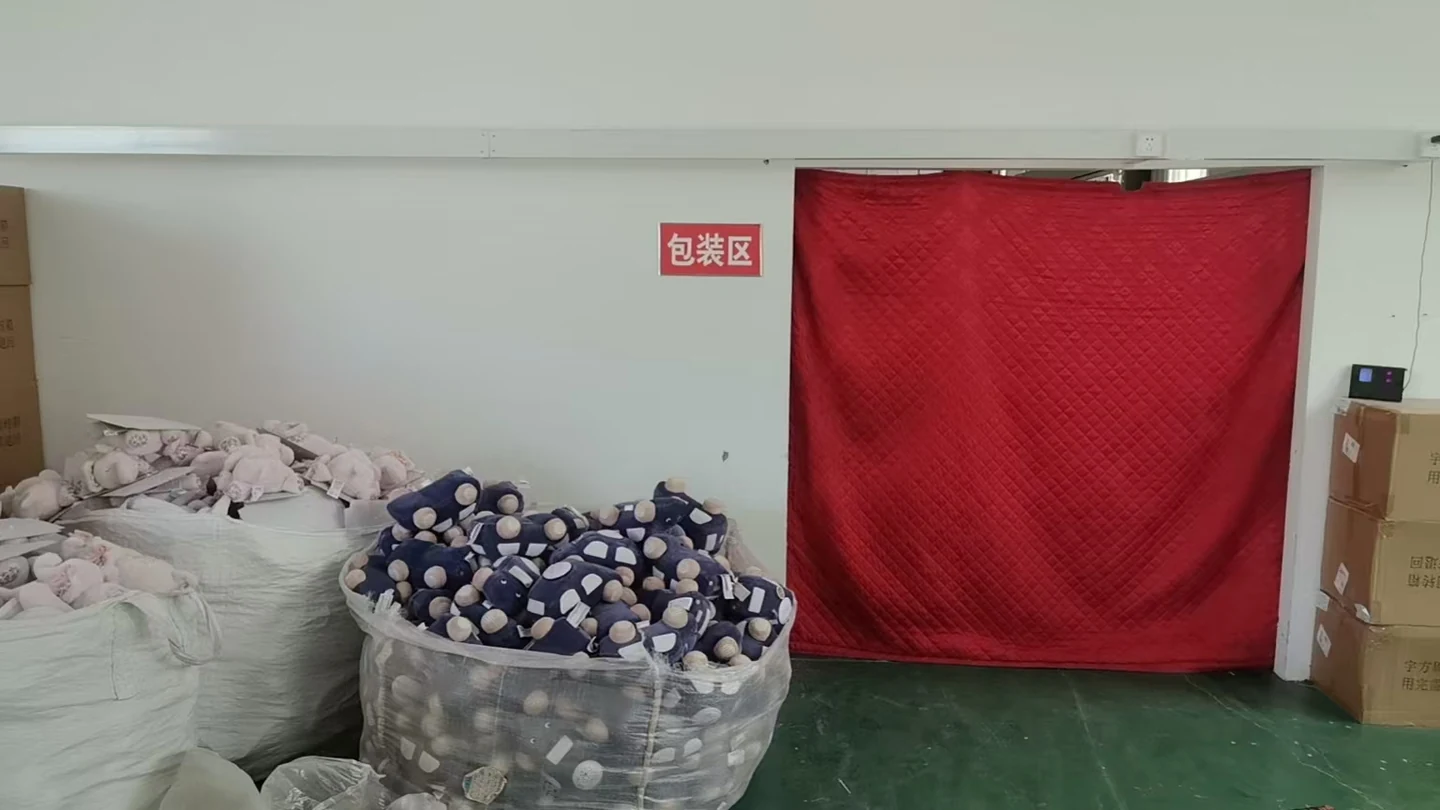
12. Compare Quotes on the Same Scope
A useful quotation should make its assumptions visible. Send each supplier the same information and request the same breakdown:
- quantity per design and colorway;
- finished dimensions;
- fabric and color route;
- decoration method and file count;
- filling and shape requirements;
- attachment loop and hardware;
- sewn labels, hangtags and packaging;
- sample type and revision assumptions;
- buyer-required testing, inspection or documentation;
- delivery destination, shipping basis and required date.
Ask whether the quote is based on an existing style or a new pattern. Confirm which items are included, excluded or provisional. Then compare scope, evidence and approval process alongside price.
The Request a Quote page provides Eversun’s project handoff route. Include the current artwork, per-design quantities, target size, fabric direction, hardware, sample need, packaging, destination and inspection or documentation requirements.
Questions to Ask Before Choosing a Supplier
- Which parts of this character require pattern simplification, and why?
- Which fabric and decoration route are included in the quote?
- What will the physical sample confirm, and how are revisions handled?
- How will the approved pattern, artwork and material versions be recorded?
- Where will the hanging loop sit, and how is the assembled result checked?
- Which sewn label, hangtag and package versions are included?
- What is the MOQ for this exact design and color split?
- Which bulk quality checks are based on the approved sample?
- Which tests or documents can be provided for the exact product scope?
- What information is still missing before bulk release?
Good answers refer to the submitted design and identify evidence. Vague answers such as “standard material,” “best quality” or “all certifications” should be replaced with named specifications, samples and project-specific documents.
Put open conditions into the RFQ and schedule
- Are the pattern, face embroidery or print file and fabric colour reference released under the same version, and how will appearance and feel be approved if fabric changes on a reorder?
- If custom dyeing, pattern revision or buyer-required testing is needed, what starts each step, and have these steps been coordinated with labels and packaging in the delivery plan?
Final Approval Checklist
Before releasing a plush keychain order, confirm that the record includes:
- current artwork and character views;
- approved pattern, dimensions and silhouette;
- fabric, color and pile direction by product area;
- embroidery, print, appliqué and label files;
- filling and accepted shape reference;
- seams, attached details and closing area;
- loop, connector and hardware specification;
- intended market, use and buyer-required compliance scope;
- sample approval and all resolved revisions;
- bulk QC checklist and any inspection or test requirement;
- packaging, SKU, barcode and carton details;
- quotation scope, delivery destination and required date.
A reliable custom plush keychain manufacturer makes these decisions traceable from the brief to the approved sample and bulk inspection. That record gives the buyer a practical way to compare suppliers, control revisions and release production with fewer assumptions.