Keychain Buying Guide
Keychain Sample
Choose the right sample, check material-specific details and record what you approve before a bulk order.
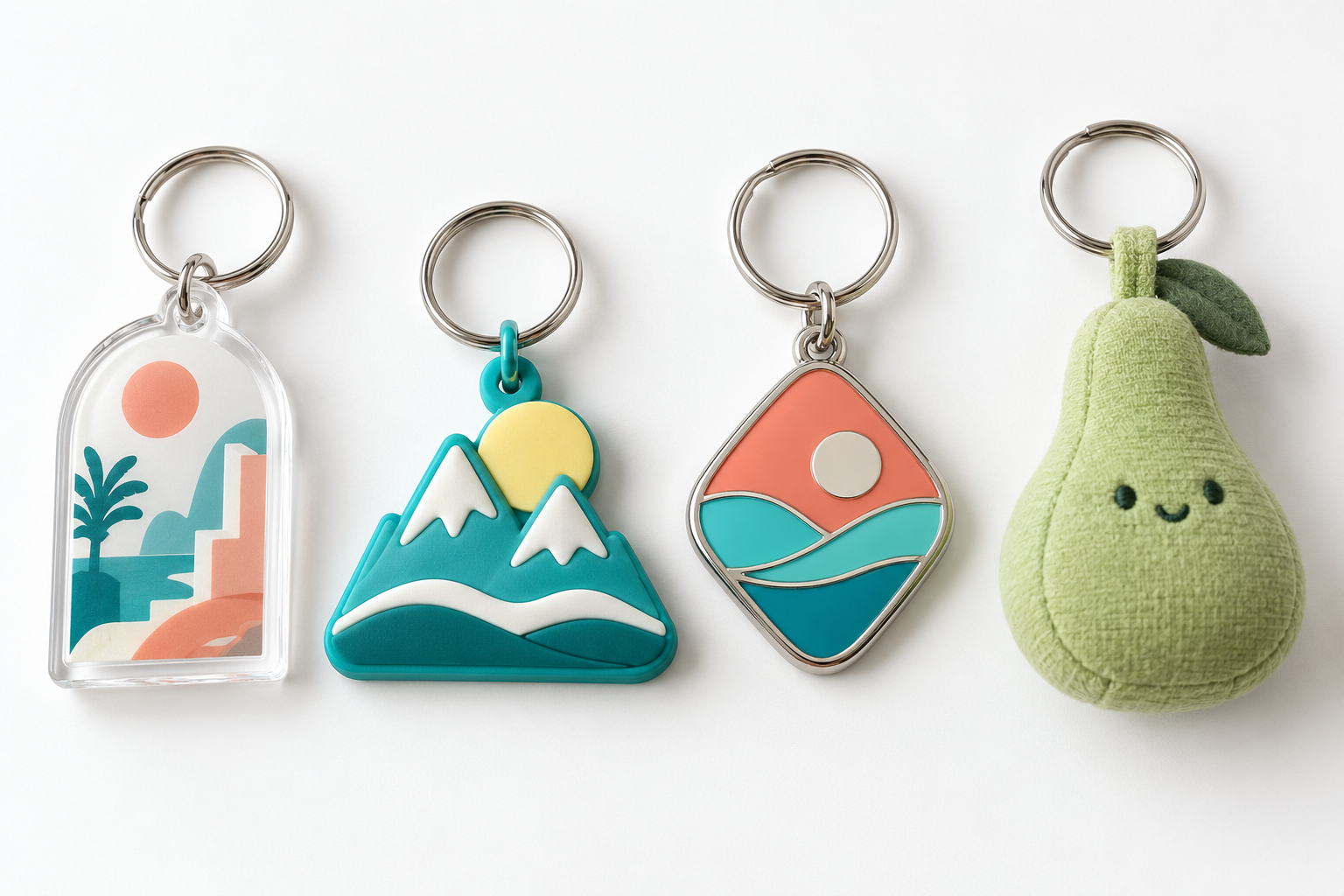
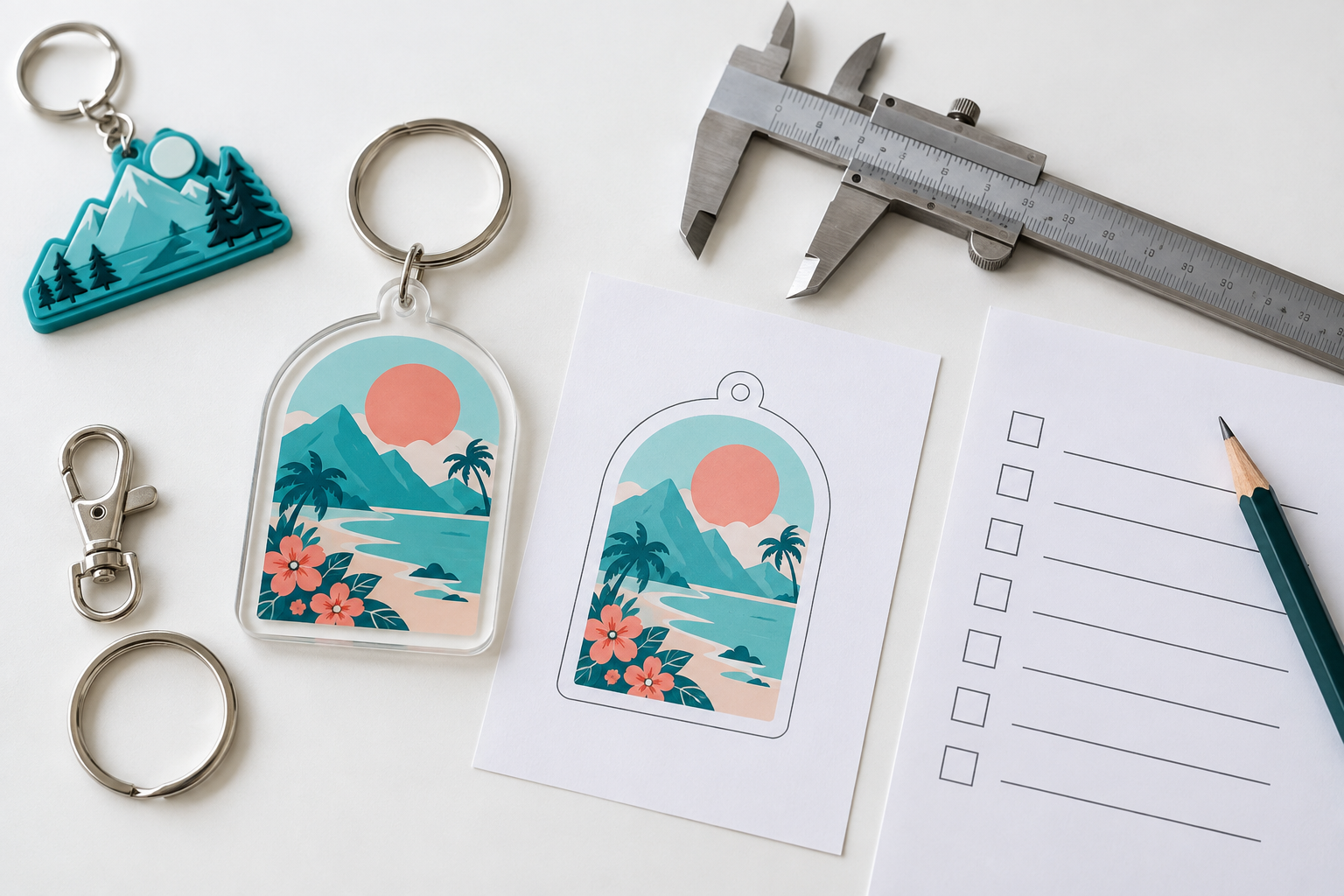
A keychain sample should help you make a production decision, not just show that a design looks attractive. First identify whether you need a reference sample to compare materials, an artwork proof to check the design or a custom physical sample to assess your own product. Then record the dimensions, finish, attachment and packaging you are approving.
This guide is for brands, gift buyers and retailers preparing a custom order. For material selection, see our custom keychain options. For the information needed to compare quotations, use the bulk keychain quote guide; the checklist below focuses on sample review and approval.
Are Free Keychain Samples the Same as Custom Samples?
No. A reference sample can help you assess a material or finish, but it does not establish that your own artwork, shape and construction have been approved. An electronic proof helps check the drawing; it cannot replace physical checks of texture, assembly or a sewn shape.
| Sample type | What it helps you check | What it does not settle |
|---|---|---|
| Stock reference sample | Material feel, a finish example and an attachment type. | Your custom shape, artwork, exact colors or final assembly. |
| Electronic artwork proof | Design version, front and back, dimensions, outline and attachment position. | Actual texture, surface appearance, sewing volume or hardware performance. |
| Custom physical sample | The agreed design and construction in a physical object, within the stated sample scope. | Unreviewed changes or the quality of every item in a future production batch. |
Eversun sample fees and shipping
Reference samples may be provided free by agreement; the customer pays the sample shipping cost. Ask which available sample can help you assess your material or finish and whether it can be supplied free. An existing sample selected from our inspiration library and a newly made custom sample are different requests, with the existing-sample fee and custom sampling fee quoted separately. Not all library samples are free, and free reference samples do not mean free custom development or free delivery.
Custom sampling fees for acrylic and plush keychains can be refunded or credited. Other keychain materials do not qualify for that sampling-fee refund or credit. Before commissioning a sample, ask us to confirm the applicable conditions, amount and timing in your project quotation. Do not assume an automatic full refund or treat a sampling-fee arrangement as a refund of every development cost.
PVC projects have sampling and mold fees that should be stated separately. Standard sewn plush sampling is priced according to sample complexity, without a separate ordinary mold fee. A plush design involving a molded vinyl face or a special fabric color needs its own development scope and cost review.
What to Send When You Request a Sample
Tell us which decision the sample needs to support. A request to compare finishes is different from a request to approve your exact design for production.
- Product and material: acrylic, soft PVC, metal or plush; include the intended retail, merchandise or gift use.
- Artwork version: send the design files and reference views. Identify the front, back, outline, hole or hanging point, and any details that must not change.
- Finished size: state the body dimensions and whether any overall dimension includes the ring, chain or clasp.
- Quantity per design: give the planned bulk quantity for each design, separately from the number of samples requested.
- Hardware and packaging: specify the attachment, finish color, bag, backing card or other packaging you need included in the sample review.
- Questions and destination: list the details you need to check, the delivery address and any target date. Request confirmation of feasibility and charges.
Use Upload Artwork for design files and Order Samples for sample requests. Ask which items will be included, omitted or represented by a temporary substitute before assessing the sample.
Check the Sample According to Its Material
Use the agreed specification and artwork as your reference. The checks below help organize a review; they are not universal tolerances, laboratory test results or a guarantee that all materials should look the same.
Acrylic: Print, Clear Areas and the Hanging Point
For an acrylic keychain sample, compare the cut outline, body size, thickness and hole position with the approved artwork. Check the front and back separately, including the direction of any lettering. Review the agreed white-ink areas, transparency and optional surface treatment under consistent lighting.
Confirm whether protective film is present and how to remove it before judging the finished surface; do not assume every construction uses the same film. Check edges and the hole area, attach the specified hardware and examine how the charm hangs. See acrylic keychain options.
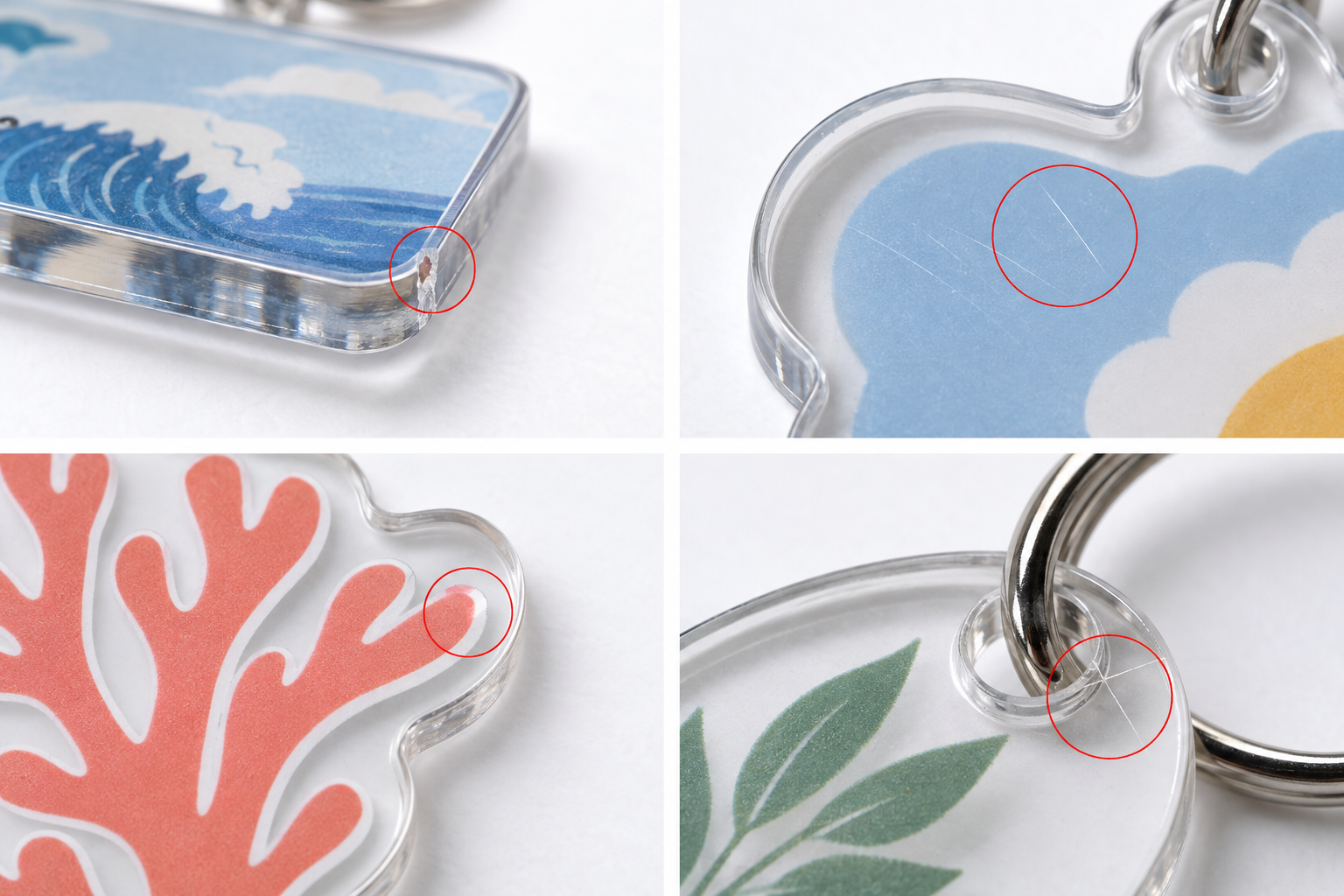
- Cut edges and attachment hole: check chipped edges, rough cutting remnants and cracks around the hole. Record the location and extent, not just a general comment that the edge is uneven.
- Surface: distinguish actual scratches, contamination and trapped bubbles in an optional coating from marks on removable protective film. Inspect the agreed finished surface.
- Print: check front/back orientation, missing print, registration, white-underprint alignment and visible color differences against the approved reference.
PVC: Relief, Separate Parts and Parting Lines
Review flat layered designs differently from rounded 3D forms. Compare the intended relief, thickness, color blocks and front, back and side views. For a multi-part design, check the joins and alignment, not only the front appearance.
A mold parting line is not the same as an assembly seam between separately made parts. Check the agreed location and visibility of each. If a line crosses an important face or logo detail, record it as a specific review point instead of approving from one front-view photo. Any change to the structure or parting arrangement needs a fresh scope and cost check. See soft PVC keychains.
- Flash and rough edges: inspect the perimeter, parting area and attachment point for excess material, thin flash, rough trim remnants or sharp projections. An agreed parting-line mark is not automatic approval of excess flash.
- Adhesive overflow: where separately made parts are glued, check visible squeezed-out adhesive, glue strings, contamination and misalignment at the joint. Glue overflow belongs to a glued assembly; do not label molding flash as adhesive.
- Color and molding: check color bleeding, ragged color boundaries, incomplete details, visible pits, bubbles or contamination against the agreed construction.
- Attachment and assembly: check tears at the hanging point, loose parts and displaced inserts. Agree any required connection-strength test separately; the plush test below is not automatically a PVC test.

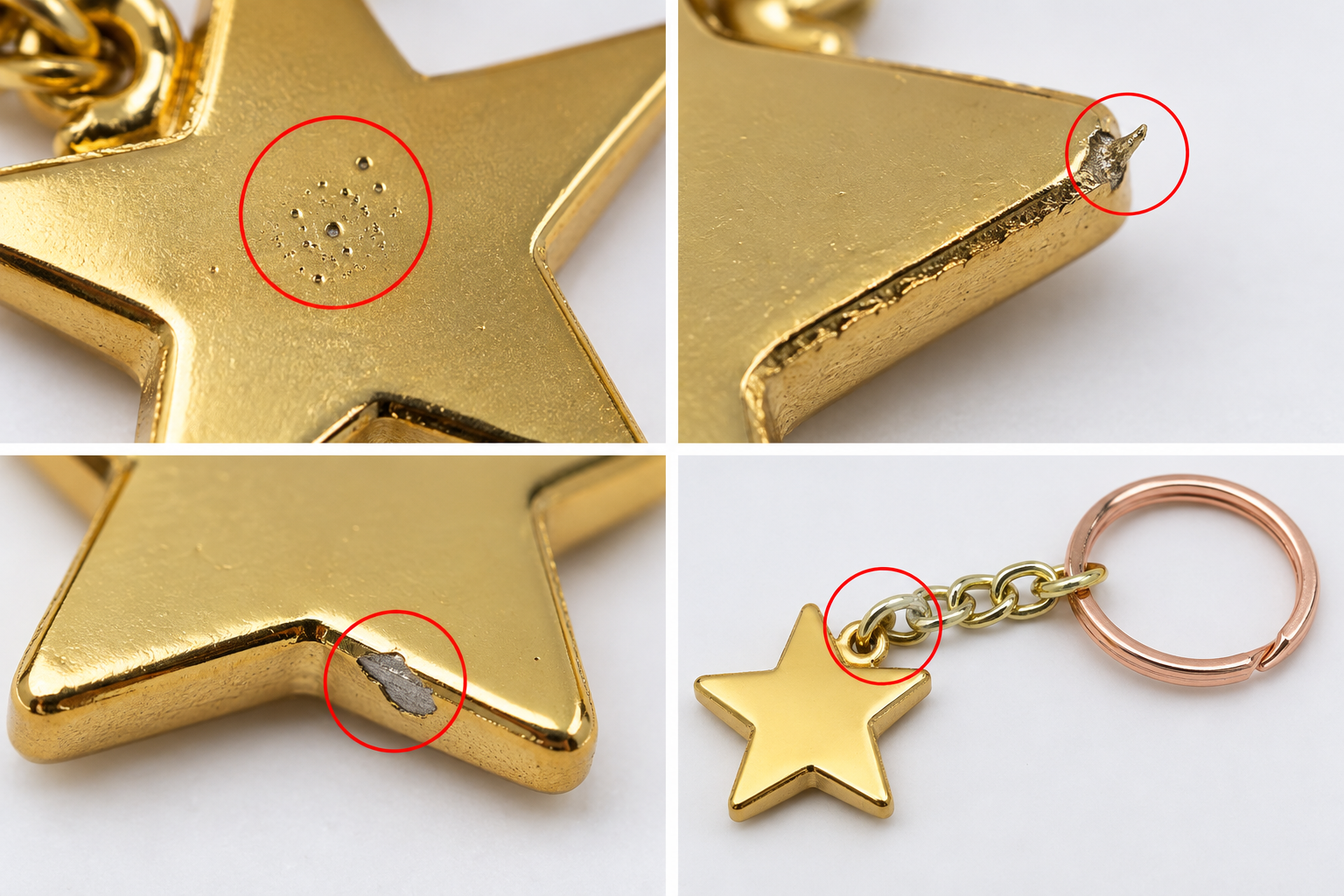
Metal and Gold-Colored Keychains: Surface Defects, Edges and Hardware
Check the specified base material, thickness, plating color and front and back treatment against the project record. Inspect the edges, lettering, filled areas or other agreed decoration. Judge an enamel, printed or engraved design against its own finish specification rather than a sample made by a different process.
Review the connection points, ring or clasp and how the finished piece hangs. A photo cannot settle the weight, feel or operation of the attachment. Any required strength or material-compliance testing should be specified separately, with an agreed method and evidence. See metal keychain options.
- Plated or coated surfaces: check pitting, pinholes, rough particles, scratches, blisters, peeling and exposed base material. Record the affected area and severity; appearance alone does not establish the cause or coating thickness.
- Edges and contact areas: check the charm perimeter, hole, chain ends, split-ring tips and clasp for burrs, sharp projections or pinch hazards. Do not rub a suspected sharp edge with bare skin; have inspection personnel use the agreed tools and method.
- Gold-colored components throughout the assembly: confirm the actual base material and finishing process. Gold color does not prove genuine gold plating. Compare the charm, ring, chain, clasp and decorative fittings with the agreed finish sample, including tone and gloss where a matching finish is required.
- Function and durability: check loose joints, open chain links, split-ring deformation and whether the clasp closes and returns correctly. Any coating-adhesion, rub, corrosion or connection-strength test needs an agreed method, conditions and acceptance criteria; do not invent a test duration or apply the plush force requirement automatically.
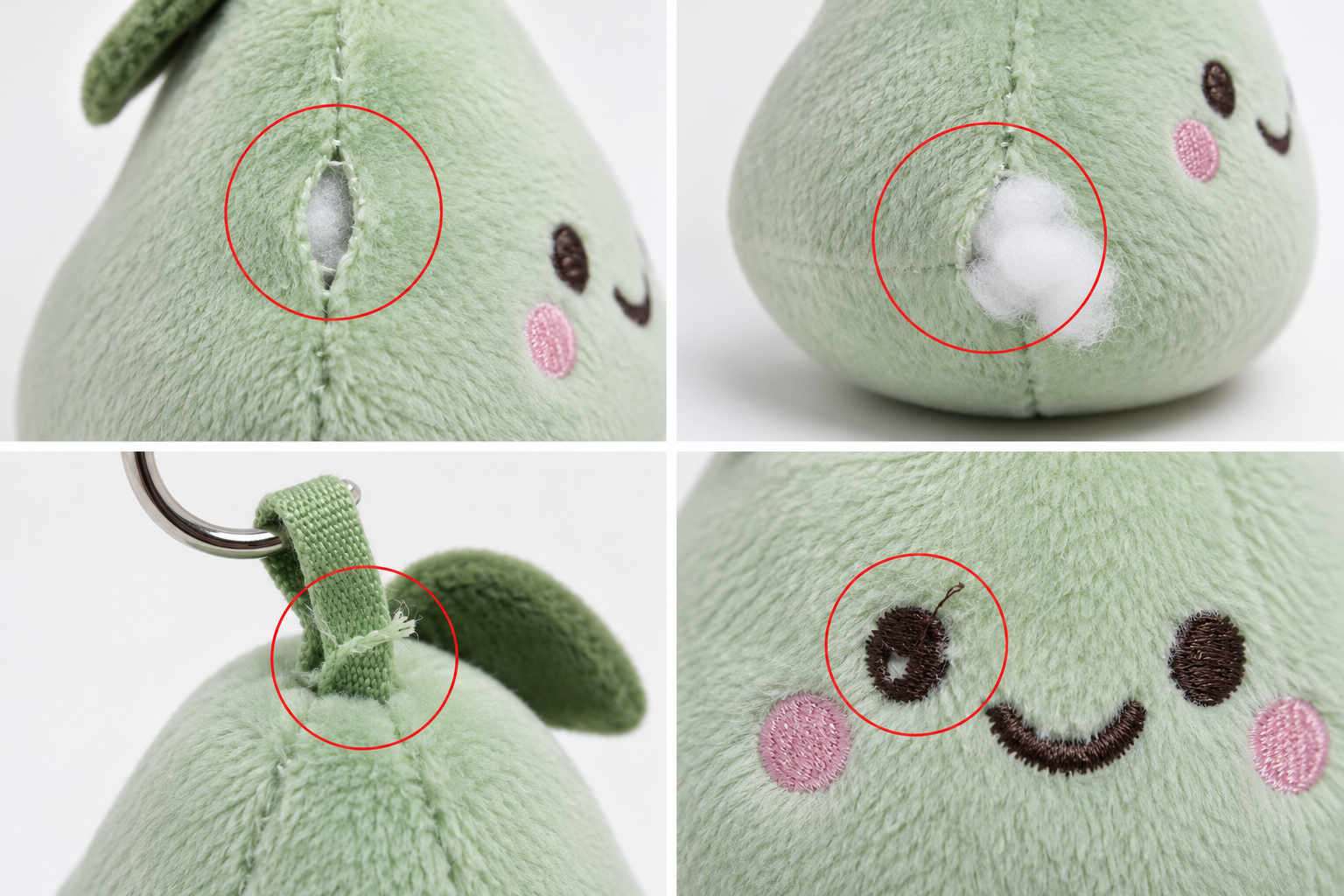
Plush: Silhouette, Sewing and the Attachment Loop
Check the physical shape from the front, side and back. Compare proportions, face details, fabric appearance, filling and seams with the intended design. A flat drawing does not fully define the volume of a sewn object.
Review the placement of the hanging loop and attachment, including how the plush hangs when connected. Record which details are approved and which need revision. For a molded-face hybrid, assess the molded part and its connection to the sewn body separately. See plush keychain development.
- Sewing and closure: check skipped or broken stitches, open seams, loose thread ends and an inadequately closed stuffing opening. Filling must not be exposed or leak out.
- Shape and decoration: check uneven filling, collapsed areas, fabric contamination, misplaced face details and loose embroidery. Compare the physical volume with the approved sample rather than a flat drawing alone.
- Loop and connection: inspect the loop stitching and attachment to the body, not only the metal ring. Include any separately attached component in the agreed review scope.
Eversun’s plush sample-review requirement for the seams and hanging-loop connection is a 90 N pull, held for 5 seconds after the target force is reached. There must be no broken stitching, seam opening, stuffing exposure or leakage, or connection failure. Confirm the grip positions, pull direction, loading method and number of test samples before testing; record the sample version, equipment, conditions, outcome and supporting photos. This is the company’s review requirement, not a claim that a sample has passed or a substitute for applicable product-safety testing.
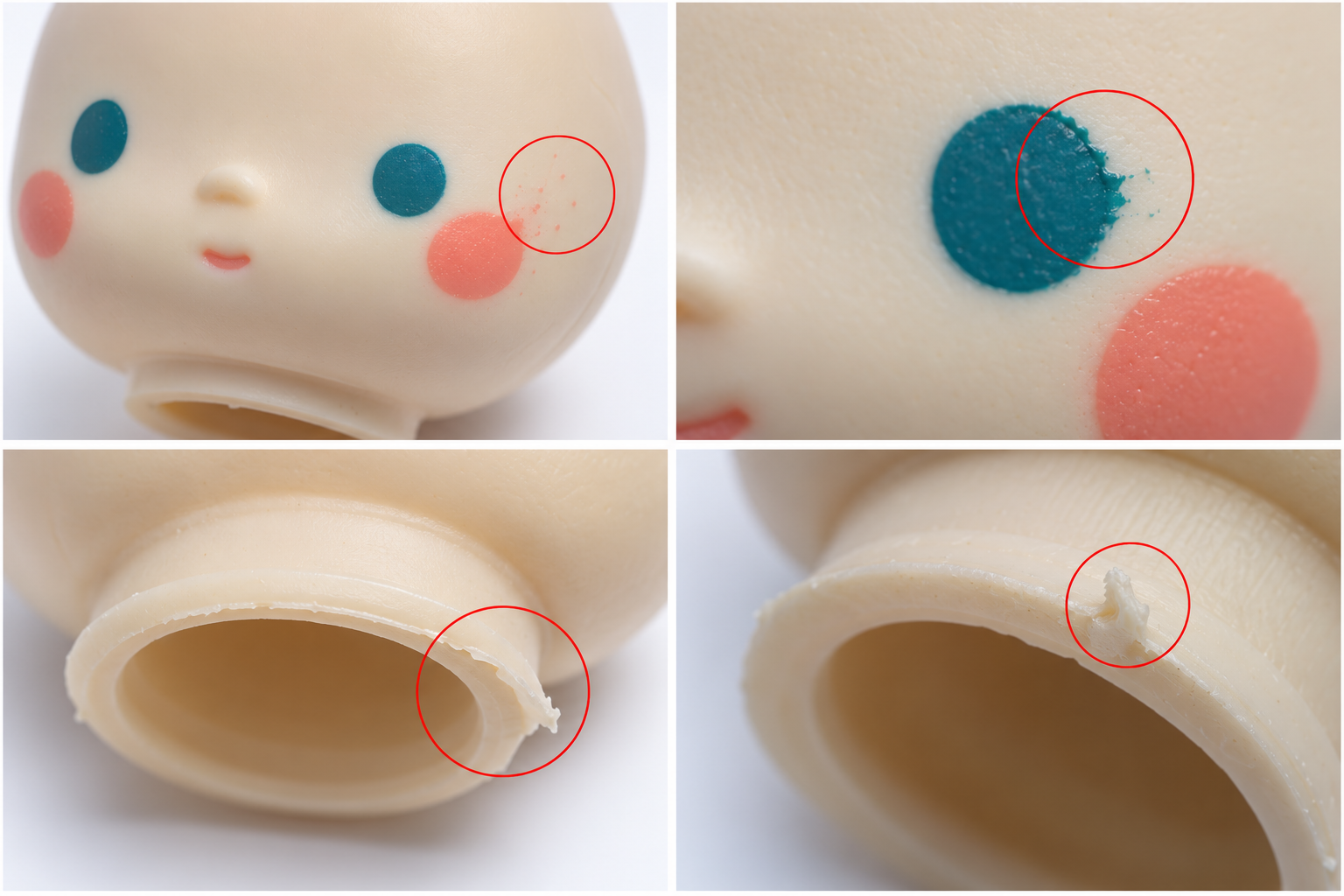
Vinyl Components in Plush Hybrids: Paint Edges, Flash and Burrs
A slush-molded vinyl face or other vinyl component needs a separate review from the sewn plush body. For sprayed finishes, check overspray, color extending beyond the intended boundary, patchy or missed coverage, uneven paint and damage to the painted details. Confirm the agreed paint color and finish on the physical sample.
Inspect molded edges and joining rims for untrimmed flash, rough trim remnants and burrs. Paint overspray is not molding flash: one concerns the paint application, the other excess molded material. Also review distortion, the fit to the plush body and any visible adhesive at a glued joint. Agree paint-adhesion or rub tests and component-connection tests separately; do not assume the plush 90 N requirement applies to every vinyl part or painted surface.
Close Defects and Confirm a Sealed Reference Sample Before Bulk Production
Photograph each issue, identify the design version and describe the difference precisely. “The color is wrong” is less useful than stating which area differs from the agreed color reference. Label each item as approved, changes required or not assessed.
If a revision changes the material, construction, mold, artwork or attachment, confirm whether another physical sample is needed and whether fees or timing change. Do not let an approval of one version silently carry over to a different design.
Before Eversun starts bulk production, the buyer and Eversun must confirm and retain an approved physical reference sample, identified in a written approval record. This is the sealed or signed-off sample used as the production reference, not simply a sample that has been dispatched or a general “looks good” message. Close the required corrections and tests before confirming it.
- Complete the corrections and any required repeat sample or test; unresolved approval-blocking issues are not treated as passed.
- Identify the physical sample with its design code, final version and confirmation date, and link it to the approved artwork, specifications, finish and attachment records.
- Confirm that the buyer and production team use matching approved references and record who authorized the production version. Record packaging approval separately if it was not included in the physical sample.
- If material, artwork, structure, finish or hardware changes afterward, review the change and renew the sample approval before production uses the changed version.
View the full sample approval record
| Record | What to include |
|---|---|
| Sample identity | Design code, sample version, review date and artwork/specification version. |
| Scope reviewed | Body, finish, attachment, packaging and any items not yet assessed. |
| Changes | Issue photos, measurements where relevant, requested corrections and whether a revised sample is required. |
| Agreed reference | The identified sealed physical sample, approved files, color references and any agreed acceptable variation. |
| Required tests | For plush seams and the loop connection: 90 N held for 5 seconds, plus agreed setup, sample count and recorded result. Other material and finish tests have separate agreed requirements. |
| Production scope | Quantity for each approved design, packaging version and any separately required tests or inspection arrangements. |
| Approval | Buyer and Eversun confirmation, sealed-sample identity and the version authorized before bulk starts; unresolved items remain explicit. |
Keep the agreed reference sample and confirmation record together. Sample approval establishes a reference; it does not remove the need for bulk-production quality checks.
Download the blank sample request and approval checklist
Use the checklist to close each correction
Match each issue to a view and sample version. Record the correction, the follow-up check and the reviewer’s decision.
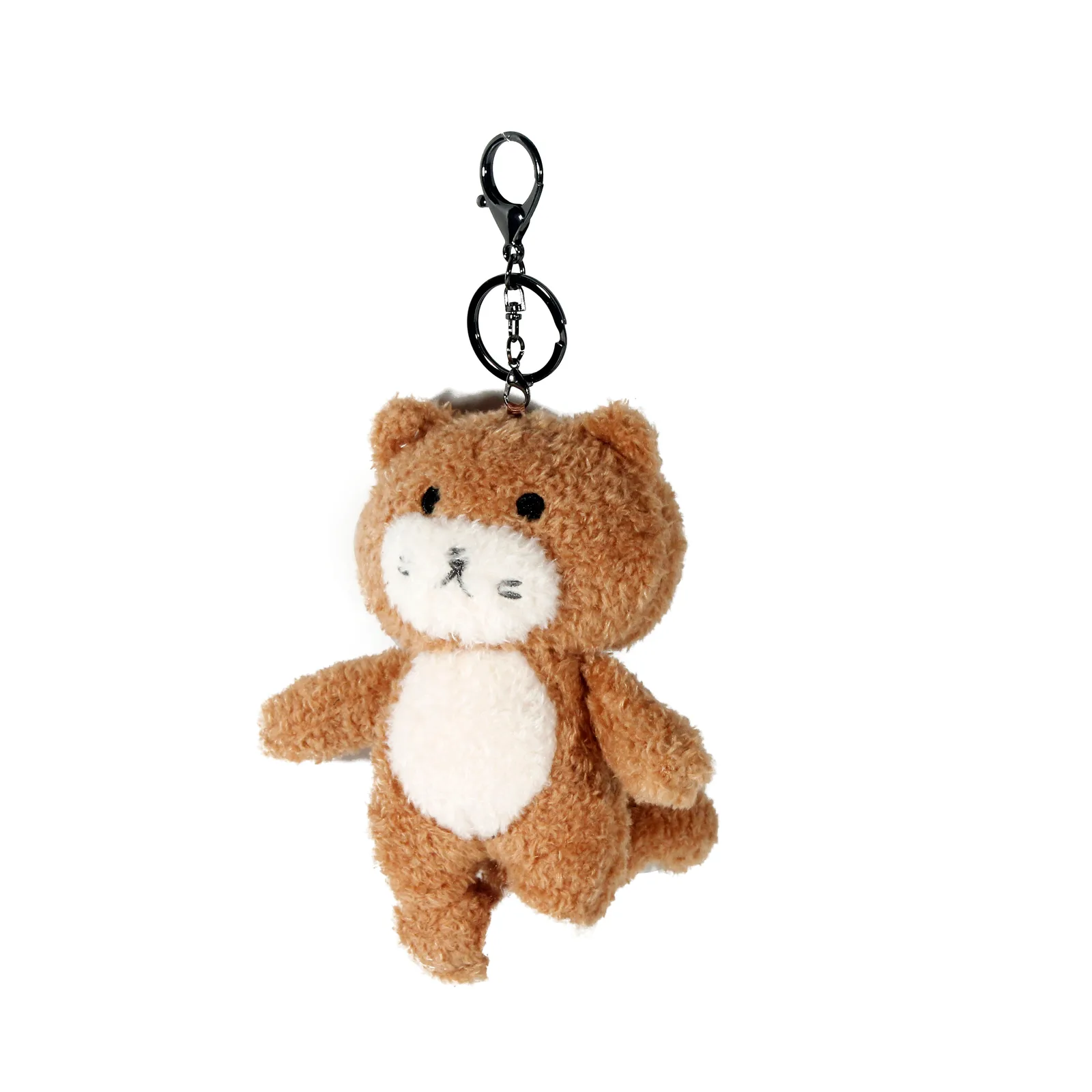

These library photos show two views of the same style. They do not show a test or an approved production sample.
Use the complete correction and approval steps
The sample request and approval checklist linked above includes a change record and a sealed-reference section. Use the change record once for each issue, then connect the completed reviews to the physical sample selected for production.
- Identify the issue. Give the affected part and photo the same reference. Record the sample version, the requirement being checked and the observed difference.
- Track the correction. Record the revised file or sample version and the agreed follow-up check. Keep the issue open until the required evidence has been reviewed.
- Record the decision. Enter the reviewer, date and outcome. Carry any unassessed item into the final record; do not turn a requested correction into an approved result.
Send revised files with the artwork file list. If the change affects construction, quantity or packaging, use the quote comparison guide to confirm the revised commercial scope alongside the sample decision.
Buyer Questions
Can I approve a sample from photos only?
Photos can help review artwork, visible details and proposed corrections. Where feel, volume, dimensions, assembly or attachment operation matters, request the appropriate physical sample. Record anything that has not been assessed instead of treating it as approved.
Can every design use one approved sample?
Not automatically. If designs share a material or attachment, a reference sample may help compare those shared elements. Each different artwork, shape or construction still needs its own identified confirmation scope.
Is the sample quantity the same as the bulk MOQ?
Keep them separate in your request. Bulk MOQ concerns the production order; the sample type and number must be discussed for the project. Do not combine several designs or apply a bulk quantity to a sample request without confirmation.
What should I confirm about a sampling-fee refund or credit?
For eligible acrylic or plush sampling fees, confirm the triggering order conditions, refundable or creditable amount, timing and treatment of shipping or other development costs before paying. Do not assume the same terms apply to PVC, metal or every fee on the quotation.