
Wholesale Bag Charms Buying Guide: Materials, Hardware, MOQ, Packaging and Assortments
Article contents
- Start With the Retail Program, Not a Material List
- Wholesale Bag Charm Decisions at a Glance
- 1. Match the Material to the Bag, Brand and Price Position
- 2. Approve the Complete Hanging Assembly
- 3. Build the Assortment Before Requesting the Quote
- 4. Understand What the MOQ Applies To
- 5. Control the Logo and Brand Details by Component
- 6. Use the Right Sample for Each Decision
- 7. Plan Retail Packaging With the Actual Charm
- 8. Define Bulk QC From the Approved Sample
- 9. Compare Complete Quotes
- 10. Send a Design-by-Design RFQ
- Final Wholesale Bag Charms Checklist
Purchasing priorities
- Consistency: Can products, branded fittings, barcodes and carton assortments across the range remain tied to the same SKU and approved versions?
- Total cost: How do per-design quantities, shared components and packaging minimums affect the collection cost, and does a lower unit price change the planned assortment?
- Timing: Can samples for every style, shared hardware and packaging be ready together, and which style or approval could affect delivery of the collection?
Buying wholesale bag charms for a retail collection involves more than choosing attractive designs. A usable buying brief must connect each style to its material, complete hanging length, clasp, weight, logo method, minimum quantity, sample, package and SKU. The buyer also needs to decide how many designs and colorways belong in the first assortment and how each one will be packed.
This guide is for handbag brands, fashion buyers, gift retailers, licensors and promotional product teams planning a custom or private-label bag charm program. It expands the existing Bag Charms Buyer Guides hub. Product categories, reference styles and quotation options remain on the Custom Bag Charms Manufacturer page.
Start With the Retail Program, Not a Material List
The same charm can behave differently on a narrow handbag ring, a backpack handle or a zipper pull. Before comparing suppliers, define the retail use and selling format.
Record:
- the bag type or attachment point the charm must fit;
- the target customer and sales channel;
- whether the item is sold alone, bundled with a bag or offered as a gift;
- the number of designs and colorways in the collection;
- quantity per design and colorway;
- target visual scale and complete hanging length;
- material direction and any mixed-material components;
- logo, label or brand-tag requirements;
- individual packaging, backing card, barcode and display needs;
- destination market, required date and buyer-required documents;
- the sample and approval steps needed before bulk production.
Use the same brief for every quotation. If one supplier changes the material, clasp or pack to reach a lower price, ask for that alternative as a separate option. Quotes are only comparable when they describe the same product and assortment.
Wholesale Bag Charm Decisions at a Glance
| Decision | What to specify | What to approve |
|---|---|---|
| Material route | Main body, decorations, cord or chain, connector and finish | Component list and physical sample |
| Bag fit | Attachment point, clasp opening, complete drop and movement | Sample fitted to the intended bag |
| Assortment | Design, colorway, quantity, SKU and pack allocation | Design-by-design quantity sheet |
| Branding | Logo method, tag, plate, label or printed card | Versioned artwork and placement |
| MOQ | Existing style or new shape, minimum per design and special component minimums | Written quotation assumptions |
| Sampling | Reference, material, custom/pre-production and packaging samples | Approval record and resolved revisions |
| Packaging | Product orientation, protection, barcode, display and carton mix | Packed sample using the actual charm |
| Bulk QC | Appearance, assembly, attachment, count, labels and packing | Product-specific inspection list |
The goal is a traceable record from the buying brief to the approved sample and packing list. Product names such as “premium charm” or “luxury hardware” are not specifications by themselves.
1. Match the Material to the Bag, Brand and Price Position
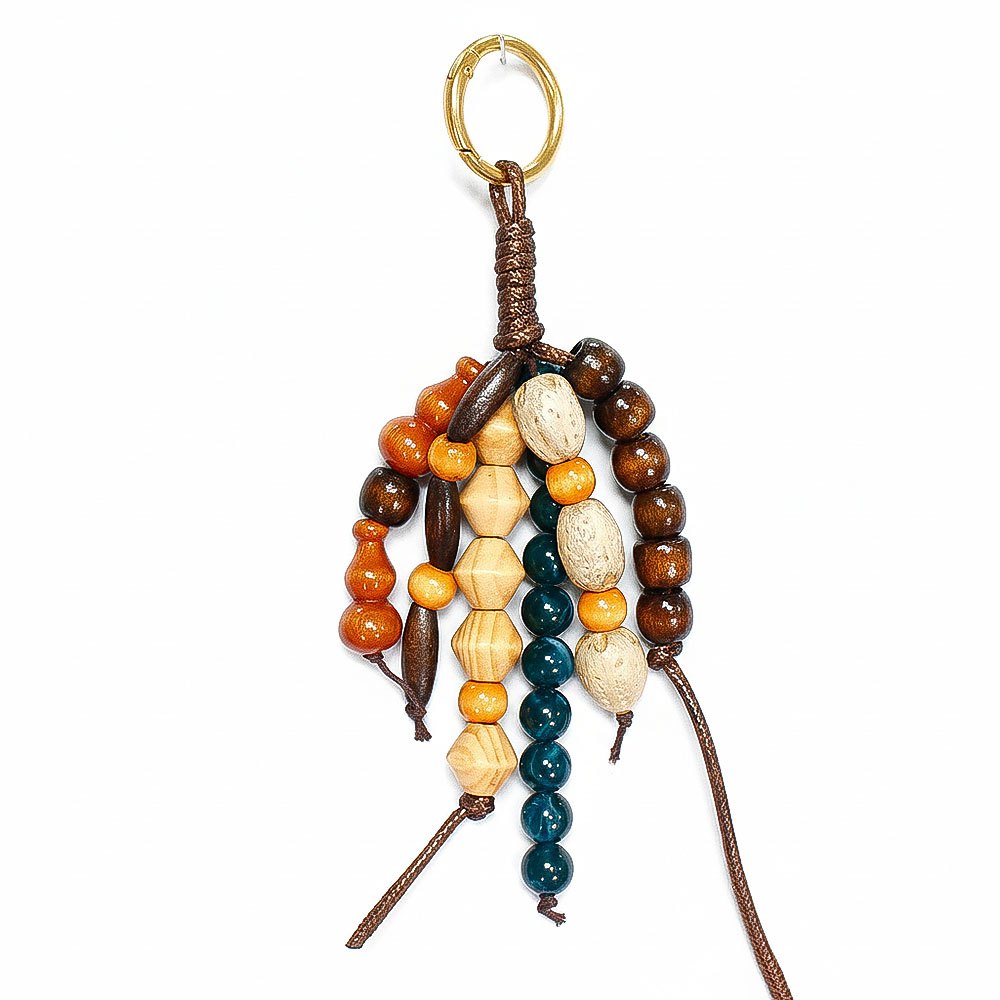
Eversun’s current bag charm range includes beaded, plush, acrylic, PVC, metal, leather or PU, and mixed-material constructions. Each route creates a different visual weight, development path and sample risk.
| Material route | Best questions to answer before sampling | Related product page |
|---|---|---|
| Beaded | What is the bead order, size, color, spacer, cord or wire route, logo component and attachment? | Custom Beaded Bag Charms Wholesale |
| Plush | Which character features must remain recognizable? What fabric, filling, face technique, hanging loop and label are required? | Custom Plush Bag Charms Manufacturer |
| Acrylic | Which artwork sides, transparent areas, cutline, hole position, sheet effect and surface protection are required? | Custom Acrylic Bag Charms Wholesale |
| Soft PVC | Which shape, relief, color areas, edge, attachment point and new-mold decisions need approval? | Custom PVC Bag Charms Wholesale |
| Metal | Which components, base materials, finish directions, colored details, connections and logo method form the complete assembly? | Custom Metal Bag Charms Wholesale |
| Leather or PU | What is the proposed material identity, surface, thickness direction, edge finish, stitching and logo method? | Custom Leather Bag Charms Wholesale |
Do not force a mixed-material charm into one material label. Separate the body, decorative pieces, cord, chain, jump rings, clasp and brand tag. Ask the supplier to identify which component is being described when it states a material or finish.
Material choice should also reflect the collection story. Plush can support a soft mascot. Acrylic can carry artwork-led graphics. PVC can create raised shapes. Metal can provide a structured component or logo plate. Leather or PU can suit cord, strap and tag directions. Beaded styles can build color and movement through a controlled sequence. These are design routes, not guarantees of price, durability or market suitability. Confirm the actual project through a sample.
Sewn-charm process reference

Factory records are grouped by the visible process. Photographs do not replace specifications, batch inspection or the project schedule.
2. Approve the Complete Hanging Assembly
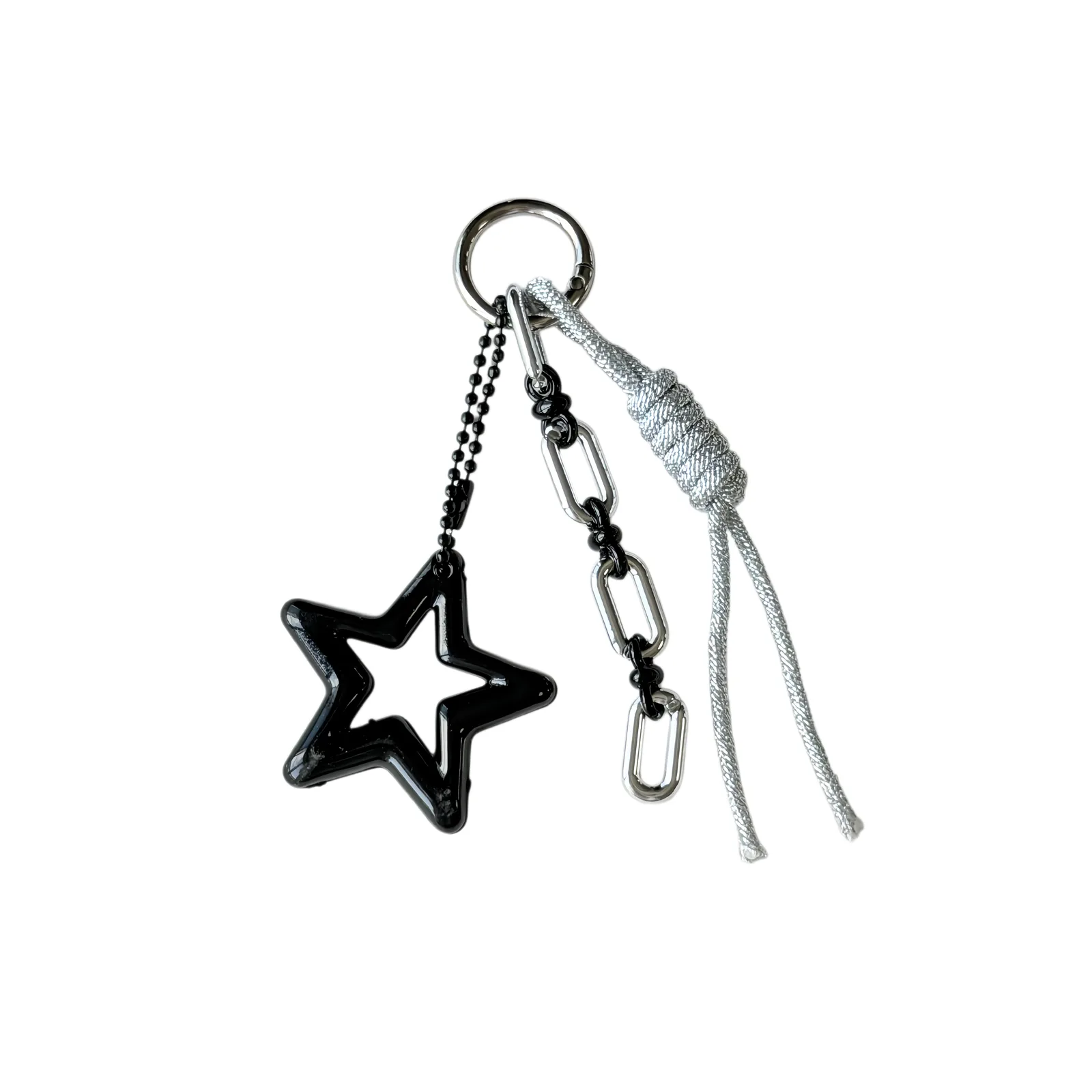
A bag charm is used while hanging and moving. A flat product photo cannot prove that the clasp fits, the complete drop is balanced or the hardware avoids unwanted contact with the bag.
Send a photograph and dimensions of the intended attachment area. This may be a handle, D-ring, narrow loop or zipper pull. Then record:
- the available width or diameter;
- the space needed for the clasp to open and close;
- the selected swivel hook, lobster clasp, keyring, carabiner or chain extender;
- the connector order between the clasp and charm body;
- the complete hanging length, including hardware;
- the intended front-facing direction;
- the movement expected while the bag is carried;
- any surface that the hardware or decoration may touch.
Fit the assembled sample to the intended bag. Confirm that the clasp closes fully, the charm hangs at the planned position and the assembly does not twist into an unwanted orientation. Check whether moving metal pieces rub the bag surface. A clasp that works on a thin sample ring may not fit a wider handbag attachment.
Treat weight as a project-specific approval point. The relevant question is whether the complete sample feels balanced on the intended bag and package. Do not use a universal “safe” weight without evidence for the actual bag, attachment and use case.
3. Build the Assortment Before Requesting the Quote
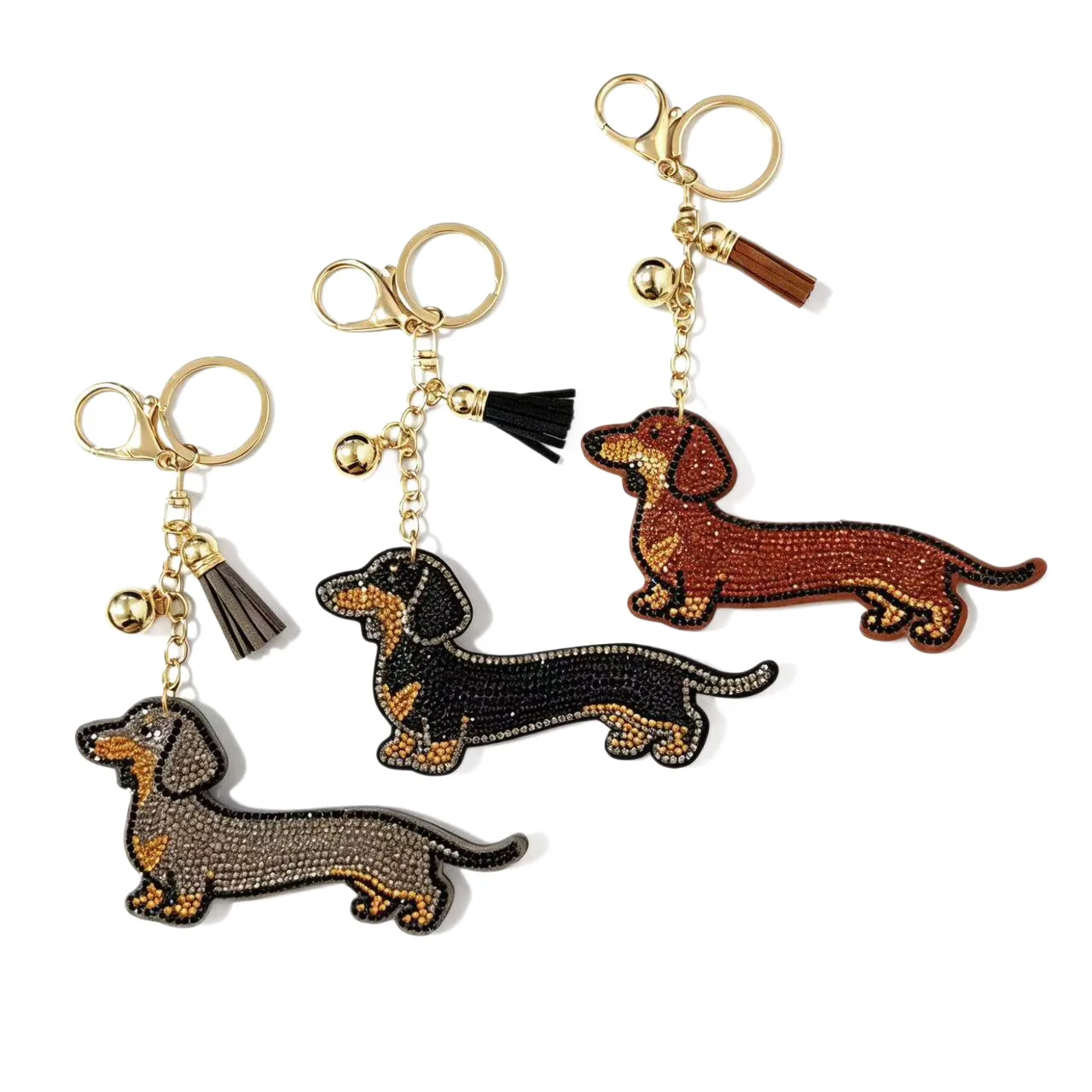
Wholesale purse charms are often bought as a collection rather than one design. The buyer still needs to state the quantity of every design and colorway. A total order quantity does not show the supplier how production, packaging and carton allocation should be divided.
Create a line plan with one row per sellable SKU:
| Field | Example of the decision to record |
|---|---|
| Style code | Buyer’s unique design reference |
| Design name | Clear internal and supplier-facing name |
| Material route | Beaded, plush, acrylic, PVC, metal, leather/PU or mixed |
| Colorway | Approved color version and reference |
| Quantity | Units for this design and colorway |
| Attachment | Clasp, ring, chain and finish |
| Branding | Logo tag, plate, label or card version |
| Pack | Individual pack and display direction |
| Barcode or SKU | Exact code mapped to this version |
| Carton allocation | Units and assortment rule per inner or master carton |
If an assortment uses the same body with several colors, confirm whether the supplier treats each color as a separate production minimum. If several designs share hardware or packaging, ask whether any component minimum applies across the combined purchase. Keep that component condition separate from the finished-product MOQ.
Eversun’s current bag charm page states that quantities from different designs are not combined to meet one new-shape minimum. Plan design-by-design quantities before requesting a firm quote.
Put open conditions into the RFQ and schedule
- When will each SKU’s sample, shared hardware, barcode and backing card be approved, and which open items could prevent the full collection from being ready together?
- If one style is approved late, is it feasible to wait for the full order or ship approved styles separately, and how will quantity, carton assortment and freight changes be approved in writing?
Colour-grouped batch reference

Factory records are grouped by the visible process. Photographs do not replace specifications, batch inspection or the project schedule.
4. Understand What the MOQ Applies To
“MOQ 100” is incomplete unless it identifies the route, design and included customization. The minimum may apply to an existing style with a logo, a new printed shape, a new molded design or one colorway.
Eversun’s current starting routes are:
- an existing style with a logo can start from 100 pieces;
- a new printed-acrylic shape can start from 100 pieces per design;
- a new soft PVC shape requires at least 2,000 pieces per design, with custom sampling and mold fees quoted separately;
- a new standard sewn-plush shape requires at least 1,000 pieces per design;
- new plush custom sampling is charged according to complexity, with no separate conventional mold fee for ordinary sewn plush;
- terms for beaded, leather or PU, metal, mixed-material and special constructions are confirmed in the project quote.
These are starting routes for the current Eversun pages, not a universal promise for every construction. Special hardware, custom-dyed material, packaging, finish, hybrid parts or other requirements can change the viable route.
Ask the quote to identify:
- the MOQ per design;
- any minimum per colorway;
- material or component minimums;
- packaging and printed-card minimums;
- sample, mold, tooling or setup charges where applicable;
- what can be shared across an assortment;
- what cannot be pooled across designs.
This prevents a low headline MOQ from hiding a higher requirement for the selected material, hardware or retail pack.
5. Control the Logo and Brand Details by Component
A brand mark can appear on the main charm, a metal or acrylic tag, a woven label, a leather or PU piece, a hangtag or a backing card. Choose the method based on the material and viewing distance.
For each mark, record:
- the artwork file name and revision;
- the component receiving the mark;
- visible size and orientation;
- proposed method, such as printing, engraving, embossing, debossing, embroidery, molding or a separate logo tag;
- color or finish direction;
- front and back treatment;
- attachment point when the logo is a separate component.
Review small lettering at the actual product size. A screen enlargement can make details look clear even when the physical result is too small. Ask the supplier to flag lines, gaps or letters that need adjustment before sampling.
When several designs share one logo tag or card, keep the master artwork controlled. When the brand treatment changes by SKU, give each version its own approval record. Do not rely on a chat attachment without a revision name.
6. Use the Right Sample for Each Decision
Different sample types answer different questions:
- a reference sample shows an existing style, construction or finish;
- a material or hardware sample shows a component option;
- a new custom or pre-production sample shows the proposed product assembly;
- a packaging sample shows the actual charm inside the intended pack.
A reference style does not approve a new logo or attachment. A loose clasp does not approve the assembled hanging balance. A printed backing-card proof does not show whether the charm fits or stays in the correct orientation.
Use Order Samples Before Bulk Production to name the sample type, design, version, required checks and destination. Send the current artwork and construction notes through Upload Artwork.
Create a written approval record:
| Approval item | Decision to record |
|---|---|
| Product identity | Style code, colorway and artwork revision |
| Material and components | Main body, decoration, cord or chain, rings and clasp |
| Size and drop | Body dimensions and complete hanging length |
| Appearance | Color direction, logo, finish, front and back |
| Bag fit | Clasp opening, closing, orientation, movement and contact |
| Assembly | Connections, movement and agreed attachment checks |
| Packaging | Orientation, protection, card, label, barcode and SKU |
| Revision | Remaining change, responsible party and new proof or sample required |
Approve the current physical result and keep it tied to the written specification. If a material, clasp, drop or pack changes, state whether another physical sample is required before bulk release.
7. Plan Retail Packaging With the Actual Charm
Packaging performs three jobs: it identifies the SKU, protects the product and presents the collection. Eversun’s current options include OPP bags, backing cards, hangtags, barcode labels, retail boxes and private-label packaging based on the project.
Test the package with the finished charm and hardware. Review:
- whether the clasp, chain or bead strands are secured;
- whether metal parts rub a decorated surface;
- whether the charm faces the correct direction;
- whether long drops or tassels tangle;
- whether plush parts are compressed or distorted;
- whether the backing card supports the product weight;
- whether the hangtag, logo and barcode remain visible;
- whether the SKU on the product, pack and packing list matches;
- whether the inner pack and carton contain the intended assortment.
Use the Packaging Options page to state the selling channel, pack style, artwork version and SKU mapping. A digital card proof can approve print content. A packed sample is still needed when fit, orientation or protection matters.
For a multi-design range, decide whether each SKU receives its own card or whether one card is shared. If cards are shared, make sure the barcode and product identification remain correct. Record assortment quantities at individual-pack, inner-pack and carton levels.
Compartment-packing reference

Factory records are grouped by the visible process. Photographs do not replace specifications, batch inspection or the project schedule.
8. Define Bulk QC From the Approved Sample
“Checked before shipment” does not tell the buyer what was inspected. The bulk checklist should follow the approved material, construction and pack.
Depending on the design, inspect:
- correct style, colorway and quantity;
- main-body material and decorative components;
- visible size and complete drop;
- logo method, position and version;
- color and finish direction against the approved reference;
- bead order, sewn shape, cutline, molded relief, edges or metal assembly as applicable;
- clasp, ring, chain and connector arrangement;
- attachment security and agreed function checks;
- front-facing orientation and hanging balance;
- individual packing, backing card, hangtag and barcode;
- SKU, inner-pack and carton assortment;
- carton markings and shipment preparation.
State the inspection method, reference and acceptance decision for each item. If the buyer requires a particular sampling plan, third-party inspection, test or document, put it in the purchase order. Do not add it after production and assume it is included.
Eversun’s Production Process connects the project brief, artwork and construction review, physical sample, bulk release and shipment preparation. Keep the same style code and revision through these stages.
9. Compare Complete Quotes
Ask every supplier to quote the same scope. Include:
- quantity per design and colorway;
- body dimensions and complete hanging length;
- material by component;
- logo method and artwork count;
- clasp, ring, chain and connector details;
- sample type and expected revision process;
- packaging, card, label, barcode and SKU count;
- bulk QC, inspection, test or document requirements;
- destination, shipping basis and required date.
Then compare:
- whether the quote uses an existing style or a new shape;
- which material and finish assumptions are included;
- what the MOQ applies to;
- which development or setup charges are separate;
- whether packaging and barcode work are included;
- how sample approval controls the bulk version;
- which items remain provisional.
A lower unit price based on a different clasp, material, design allocation or pack is not a like-for-like offer. Resolve those differences before choosing a route.
10. Send a Design-by-Design RFQ
Use the Request a Quote page to send the current brief. A useful first request contains:
- bag and retail-use reference;
- design files and version names;
- material route for every design;
- finished size and complete hanging length;
- clasp and hardware direction;
- quantity per design and colorway;
- logo, label and tag requirements;
- individual pack, barcode and carton assortment;
- requested sample type;
- destination, required date and buyer-required inspection or documents.
If a detail is undecided, mark it as a request for a proposal. This is clearer than leaving a field blank and allowing each supplier to make a different assumption.
Final Wholesale Bag Charms Checklist
Before approving a wholesale bag charm collection, confirm that you have:
- assigned one style code to every sellable design and colorway;
- recorded quantity per design instead of only the total order quantity;
- separated the body, decorations, cord or chain, rings and clasp;
- tested the clasp opening and complete assembly on the intended bag;
- approved body size, complete drop, orientation and project-specific weight;
- matched the logo method to the actual component;
- confirmed the MOQ route and any material, hardware or packaging minimums;
- approved the correct sample type and resolved revisions;
- tested packaging with the actual product and hardware;
- mapped product, pack, barcode, SKU and carton assortment;
- defined bulk QC, inspection and documentation requirements;
- prepared a design-by-design RFQ with the destination and required date.
Well-planned wholesale bag charms give buyers a consistent way to compare materials, control a multi-design assortment and approve the product and pack together. The specification becomes the link between the retail idea, supplier quotation, sample and bulk inspection.